
The road to Rio+20 – tourism lost in passage
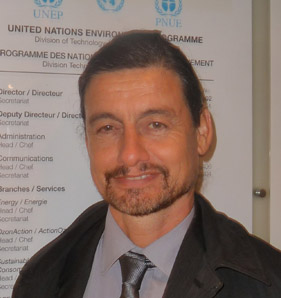
Tourism does not form part of the Earth Summit top level agenda – how to benefit? Writes Gordon Sillence
This article has been produced by Gordon Sillence Executive Director of the UN Type II Partnership to give tourism stakeholders a way to make Rio+20 meaningful in their work on sustainable tourism development.
The official component of Rio +20 officially starts today. However, this three day meeting of global leaders has taken of over a year to prepare, with official negotiations between governments working to deliver a main outcome document that is meant to update the Agenda 21 process started twenty years ago. Alongside this process, civil society hosts a people’s summit, whilst global businesses develop a unified corporate lobby, making this event a a major multi-stakeholder review of sustainable development. What is evident in Brazil this time round is that the global sustainable development discussion is rich in innovative piecemeal solutions to global challenges, but lacks both international and multi-stakeholder coherence, strategic organisation and resources.
The reality is the same as it ever was … Even the original Agenda 21 and the following 10 year review in Johannesburg in 2002 produced weakened negotiated final documents, and this Mega-conference is no exception. In the final days of the word by word discussions, where much of the text on key Agenda 21 principles was crossed out with the brackets next to them saying (deleted USA/Canada), only one third of the document had been agreed, and the Brazilian government stepped in with a much reduced and much weaker text to save the day. All in all, you have to question the merit of government negotiation frameworks that lead to acceptance of lowest common denominators when what is needed is strong leadership and radical socio-economic re-structuring of the now globalized national economies.
But that does not make Rio+20 a colossal waste of time – on the contrary, it provides a true barometer of sustainable development. And on this barometer we can note many things. The first of which is that concurrently running events such as the Euro2012 football competition has attracted billions whilst Rio picks up thousands of interested people, and that the G20 summit in the same week talks of billions of dollars that actually do get into national budgets whereas the millions promised in the Agenda 21 negotiations are promises that are smoked mirrors of existing government development budgeting.
Moreover, with President Obama, Angela Merkel and David Cameron not attending, it’s clear to see that Rio +20 has not been given the priority from governments that it deserves. Even that date was shifted to take into account the British Queens birthday, which government ministries gave a higher priority. And despite excellent negotiating manoeuvres by the hosting Brazilian Government, anyone following this process in full can see that the rushed and inconclusive end-game was an inevitable consequence of under-resourced and poorly conceived preparatory work at the national level.
On the other hand, civil society goes into overdrive for these events, and the unification of NGOs and the proliferation of both excellent policy position papers and exemplary projects will lead to another upping of the level of sustainability thinking around the planet, which is what the original Agenda 21 and the follow-up WSSD inspired, and perhaps is all one can expect of meta-government decision-making processes.
The missed opportunity screams out at those who are aware of the full extent of the triple bottom line global crises. The outcome document will call for "urgent action" on unsustainable production and consumption, but there will be no detail, no timetable, and no strategy on how to develop the green economy or implement the institutional transformations that we discussed 20 years ago. When the dust and noise of Rio+20 settles down, we will return to the formal and ongoing Agenda 21 review process that was initiated in Johanessburg as a bi-annual review cycle of specific topics highlighted by the WSSD Johannesburg Plan of Implementation. The glaring omission of the 10 year review in the ‘what is happened to Agenda 21 discussions’ reveals again the lack of institutional memory in the face of overwhelming complexity of international governance .
NGOs point to government and business alliances that continually move to protect a status quo that is driving nation- states into disequilibrium, consolidating vested interests and marginalising billions of global citizens whilst ruthlessly and relentlessly exploiting our natural resource base, with dire consequences for environment and biodiversity. Governments, bound by institutional self-interest, refer to short -term national economic priorities that override long term sustainable development strategies. Businesses cleverly capitalize on government incapacity by calling for better government and the freedom to implement a market-led green-washed version of sustainable development, ie business as usual.
Where does this leave tourism stakeholders? Out of the picture is the truthful answer, with tourism not mentioned in the zero draft of the Outcome document and stakeholder deliberations reduced to two side-shows, one hosted by the UNWTO/UNEP/OECD on Green Innovation and Tourism, and the other being the ICRT annual conference discussing progress on sustainable tourism but hosted an hours flight away in Sao Paolo. Neither event will catch the eye of key decision makers or even mainstream media, nor merits the real significance of tourism stakeholder activity in the global economy, or its potential to catalyse green economic development. Neither the UN-WTO nor the EU have developed substantive processes to bring tourism into the global economic spotlight, and the cost is a lost decade of effective policy-making concealed by aspirational statements lacking on-the-ground implementation.
The future has to be brighter, and to that end the UN Type II DestiNet Partnership on Sustainable tourism has launched its ten year plan to continue working on sustainable tourism development through ICT-based knowledge networking. It is building a space in the Portal to gather useful information from Rio+20 and preserve its legacy for tourism stakeholders to capitalize on in the next decade of implementation. The travel and tourism industry must learn from the Rio+20 experience and take a lead in building the green economy mosaic, if only as a self-preservation measure, but more fruitfully as a means to overall sustainable development.
Gordon Sillence has opened up a reflection space on the DestiNet Portal where you can add your comments and information. HERE
contact: Gordon Sillence [email protected]
http://www.destinet.eu


Valere















Vegas’s Billion-Dollar Secrets – What They Don’t Want Tourists to Know

Visit Florida’s New CEO Bryan Griffin Shares His Vision for State Tourism with Graham

Chicago’s Tourism Renaissance: Graham Interviews Kristin Reynolds of Choose Chicago

Graham Talks with Cassandra McCauley of MMGY NextFactor About the Latest Industry Research

Destination International’s Andreas Weissenborn: Research, Advocacy, and Destination Impact

Graham and Don Welsh Discuss the Success of Destinations International’s Annual Conference

Graham and CEO Andre Kiwitz on Ventura Travel’s UK Move and Recruitment for the Role

Brett Laiken and Graham Discuss Florida’s Tourism Momentum and Global Appeal

Graham and Elliot Ferguson on Positioning DC as a Cultural and Inclusive Global Destination

Graham Talks to Fraser Last About His England-to-Ireland Trek for Mental Health Awareness

Kathy Nelson Tells Graham About the Honour of Hosting the World Cup and Kansas City’s Future

Graham McKenzie on Sir Richie Richardson’s Dual Passion for Golf and His Homeland, Antigua







 ADS PRO
Higher departure tax and visa cost, e-arrival card: Japan unleashes the fiscal weapon against tourists
U.S.A. and Israel attacks on Iran impact air movements in the Gulf (Update 1.00pm CET)
Global tourism exceeds 1.5 billion travelers announces UN-Tourism
WTTC global tourism reached record economic impact of 11 trillion in 2025
Marginal increase for New York City tourism in 2025