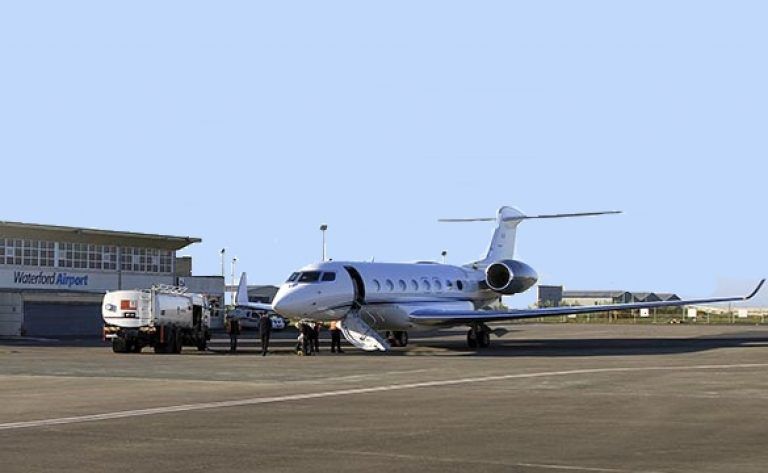
Waterford Airport has officially broken ground on a €30 million redevelopment project aimed at restoring international commercial air services to Ireland’s South East region.
Backed by private U.S. investment, the project will see the airport’s runway extended to 2,287 meters and widened to 45 meters, allowing it to accommodate large commercial jet aircraft for the first time.
Airport officials are targeting annual passenger traffic of 400,000 within three years of operations resuming.
Preparatory work is already underway, with completion expected in 2027. The development also includes upgrades to terminal facilities, parking areas, and ground handling infrastructure.
For Ireland’s aviation sector, the project represents a significant investment in regional connectivity at a time when infrastructure development has often been slowed by lengthy planning processes and funding challenges.
The bigger challenge, however, may come after construction is complete.
Waterford airport to prove its usefulness between Cork and Kerry
Waterford Airport will enter an increasingly competitive regional aviation market. Once operational, it will join Cork, Shannon, and Kerry airports in serving travelers across Munster region and the South East.
Talking to the Irish Examiner newspaper, airport CEO William Bolster has emphasized that Waterford intends to complement rather than compete directly with Cork Airport, highlighting a catchment area of roughly 680,000 people within a 60-minute drive.
The region’s tourism sector provides some encouragement. Waterford welcomed approximately 1.2 million visitors last year, while the wider South East continues to grow its appeal through attractions such as the Waterford Greenway, Ireland’s Ancient East tourism program, and an expanding calendar of cultural and outdoor events.
Across Munster, tourism remains a major economic driver, attracting millions of domestic and international visitors annually, supported by strong demand for coastal, heritage, and adventure travel experiences.
Regional airports have also been posting record numbers. Cork Airport handled nearly 3.5 million passengers last year, its busiest year on record. Over 2.3 million passengers travelled through Shannon Airport last year, the highest number in 16 years and a 9% increase on 2024. Kerry Airport also achieved record traffic, approaching 500,000 passengers, while continuing to grow its corporate aviation and luxury travel business.
Supporters of the Waterford project argue those figures demonstrate room for additional competition and new route development. Critics, however, question whether the airport can attract sufficient demand without drawing passengers away from existing regional gateways.
Ryanair Group CEO Michael O’Leary has previously expressed skepticism about the airport’s long-term traffic projections, suggesting the 400,000-passenger target may be overly ambitious. He has indicated the carrier could consider limited London services if operating costs were highly competitive, while noting Waterford sits between the established catchment areas of both Cork and Dublin airports.
Still, Ireland’s geographic realities continue to favor air travel. Unlike mainland Europe, where governments are increasingly investing in high-speed rail alternatives, Ireland’s island location means aviation remains the primary gateway for international connectivity. Major rail projects underway across continental Europe are unlikely to provide a practical alternative for Irish travelers anytime soon!