
Why is food so critically important to tourism?
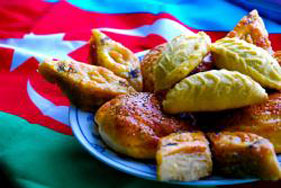
Silk Road Flavours food conference emphasizes the power of food to engage sustainable tourists
Of course everybody knows that good food attracts good tourism. Could you think about Spain without ‘Paella’ or Italy without pasta or France without baguettes? Well, that’s the world’s top three destinations dealt with!
And there are a number of critical issues that link food with tourism attraction with deep sustainability at every level of its practice:
Economic sustainability
At an economic level, agritourism develops employment, assists SMEs and SMMEs. Where, after all, would tourism be without colourful food markets for tourists to visit for local produce, artisans creating local food, and restaurants cooking it – for tourists!. Tourism money goes into markets, into restaurants, into farmers purses, helps local people start businesses.
Environmental sustainability
Food, after all, is a product of the environment. The more local the environment which produces the food – the more potent the sense of ‘Terroir’ and authenticity. It is almost seamless – the beautiful hills and valleys of Italy producing great food and wine to attract visitors, for instance. You could say the same for Spain, France, South Africa, California. Environment combined with its edible produce provides an amazingly powerful tourism draw. No wonder these environments are stewarded and acclaimed.
Cultural sustainability
Great food and drink also delivers great history and great stories. Local food in itself it is a physical manifestation of local culture. The roots of local food culture run deep, are related to their historical context. Take recipes for instance, passed from generation to generation, using local agricultural products to create a definable, durable local taste.
Social sustainability
There is nothing like food and drink to foster social interaction – especially between guests and visitors. Tasting new food, enjoying celebrations, festivals, parties – it’s what tourism has always been about.
So food and drink is at the very heart of sustainability, and no more so than in destinations not yet in the front rank of tourism – the ‘Challenger Destinations’.
Moreover, the Silk Roads have historically been avenues for food exchange and recipes and each individual Silk Road country has its own traditions for exchange, exploration and experience.
Look out for a new aroma heralding Silk Road Taste coming from the Flavours of the Silk Road: International Conference on Food, Culture and Tourism in Baku this September.
More details HERE
Valere Tjolle
BENEFIT FROM THE VISION GREEN TOURISM SPECIAL OFFER HERE


Valere




















Vegas’s Billion-Dollar Secrets – What They Don’t Want Tourists to Know

Visit Florida’s New CEO Bryan Griffin Shares His Vision for State Tourism with Graham

Chicago’s Tourism Renaissance: Graham Interviews Kristin Reynolds of Choose Chicago

Graham Talks with Cassandra McCauley of MMGY NextFactor About the Latest Industry Research

Destination International’s Andreas Weissenborn: Research, Advocacy, and Destination Impact

Graham and Don Welsh Discuss the Success of Destinations International’s Annual Conference

Graham and CEO Andre Kiwitz on Ventura Travel’s UK Move and Recruitment for the Role

Brett Laiken and Graham Discuss Florida’s Tourism Momentum and Global Appeal

Graham and Elliot Ferguson on Positioning DC as a Cultural and Inclusive Global Destination

Graham Talks to Fraser Last About His England-to-Ireland Trek for Mental Health Awareness

Kathy Nelson Tells Graham About the Honour of Hosting the World Cup and Kansas City’s Future

Graham McKenzie on Sir Richie Richardson’s Dual Passion for Golf and His Homeland, Antigua







 ADS PRO
Airlines suspend Madagascar services following unrest and army revolt
Qatar Airways offers flexible payment options for European travellers
TAP Air Portugal to operate 29 flights due to strike on December 11
Air Mauritius reduces frequencies to Europe and Asia for the holiday season
Airbnb eyes a loyalty program but details remain under wraps