
African coast sustainable tourism project success
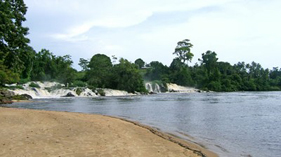
Coastal Tourism Project successfully completed in Cameroon, The Gambia, Ghana, Kenya, Mozambique, Nigeria, Senegal, Seychelles, and Tanzania
With the organization of the final project steering committee meeting in Victoria, Seychelles, the Collaborative Actions for Sustainable Tourism (COAST) Project in Africa has been successfully completed;
The COAST project, a GEF funded project, was carried out by UNEP as implementing agency, UNIDO as executing agency and UNWTO as associate agency, and included activities in nine countries in Africa (Cameroon, The Gambia, Ghana, Kenya, Mozambique, Nigeria, Senegal, Seychelles, and Tanzania).
The project had a duration of five years (from mid-2009 to mid-2014), and included components on Eco-tourism and on Sustainable Tourism Governance & Management, coordinated by UNWTO, and components on Environmental Management Systems, Reef and Marine Recreation & Management, and Knowledge Management, coordinated by UNIDO.
UNWTO undertook a best practices study, organized regional capacity building seminars for key project stakeholders introducing the ST-EP (sustainable tourism – eliminating poverty) methodology, delivered specific seminars on tourism and biodiversity in the Gambia, Ghana and Tanzania, supported the COAST countries to carry out a tourism value chain analysis in the selected demonstration sites, and worked with local partners to formulate and implement eco-tourism projects in Cameroon, the Gambia, Ghana, Kenya, Mozambique, Nigeria, and Tanzania.
The eco-tourism projects delivered tangible results on how local people can earn increased income through biodiversity based tourism products, such as a mangrove board walk in Kenya, or canoe tours in Ghana, and at the same time use tourism development as a motivation to help protect the environment, e.g. through mangrove re-planting in Tanzania or beach clean-up campaigns in the Gambia.
The eco-tourism project activities in Cameroon and the Gambia will continue with additional funding mobilized via the ST-EP Foundation and the EuropaMundo Foundation, respectively, whereas other countries expressed an interest to explore possibilities to upscale project activities and/or and replicate the approach at other sites.
For the Sustainable Tourism Governance & Management component, UNWTO carried out field studies in each of the participating countries, which formed the basis to prepare detailed action plans for the national and local level, as well as to publish a global report, titled "Sustainable Tourism Governance and Management in Coastal Areas of Africa".
Based on the field studies, action plans and publication, UNWTO organized regional seminars in Ghana, Kenya, and Senegal, which served to create an enhanced understanding of national and local mechanisms that support sustainable tourism governance and management in coastal areas, and to exchange experiences gained with the implementation of the various COAST project activities.
Further information on the COAST project can be found at the project’s website: http://coast.iwlearn.org/en.
Valere Tjolle
@ValereTjolle [email protected]


Valere














Vegas’s Billion-Dollar Secrets – What They Don’t Want Tourists to Know

Visit Florida’s New CEO Bryan Griffin Shares His Vision for State Tourism with Graham

Chicago’s Tourism Renaissance: Graham Interviews Kristin Reynolds of Choose Chicago

Graham Talks with Cassandra McCauley of MMGY NextFactor About the Latest Industry Research

Destination International’s Andreas Weissenborn: Research, Advocacy, and Destination Impact

Graham and Don Welsh Discuss the Success of Destinations International’s Annual Conference

Graham and CEO Andre Kiwitz on Ventura Travel’s UK Move and Recruitment for the Role

Brett Laiken and Graham Discuss Florida’s Tourism Momentum and Global Appeal

Graham and Elliot Ferguson on Positioning DC as a Cultural and Inclusive Global Destination

Graham Talks to Fraser Last About His England-to-Ireland Trek for Mental Health Awareness

Kathy Nelson Tells Graham About the Honour of Hosting the World Cup and Kansas City’s Future

Graham McKenzie on Sir Richie Richardson’s Dual Passion for Golf and His Homeland, Antigua







 ADS PRO
Global tourism exceeds 1.5 billion travelers announces UN-Tourism
Qatar Airways offers reduced timetable to over 60 destinations
WTTC global tourism reached record economic impact of 11 trillion in 2025
Hands In, UATP join forces for airline multi-card payments
Overseas travelers to the United States declined by 2.5% in 2025