
Agrotourism turns increasingly important for Scotland
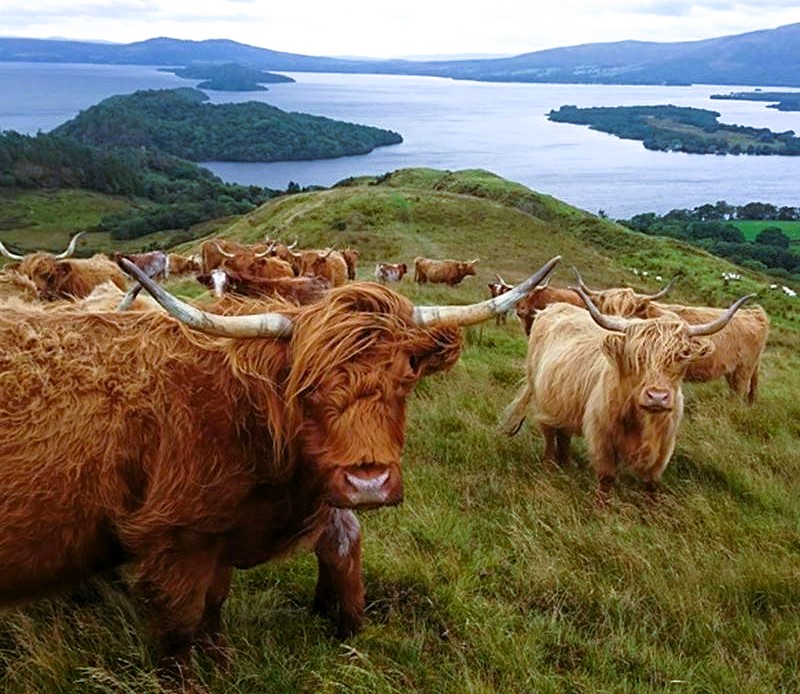
New research shows Scotland’s agritourism sector is now worth nearly £300 million -US$380 million- to the economy, with more than 2.5 million visitors welcomed by businesses across the country.
The latest Scottish Agritourism Growth Tracker, based on a survey conducted in August and September 2025, highlights a sector that is not only thriving but already outperforming key 2030 targets.
Findings indicate Scotland has reached several major agritourism goals five years ahead of schedule. The sector’s value has climbed to £292.9 million equivalent to 117% of its 2030 target, while visitor numbers have hit 2.5 million, achieving 126% of the goal.
Agritourism in Scotland is defined as tourism or leisure activities taking place on a working farm, estate, or croft that produces food or fiber. The most common offering is self-catering accommodation, provided by 67% of businesses. Farm tours and hands-on experiences are also popular, available at 40% of operations, while just over a quarter feature on-site cafés, restaurants, or pop-up food concepts. 50% of the 1,000 farms and crofts will offer their own food or drink to visitors as part of the experience or stay
The report also shows strong post-pandemic growth, with nearly half of agritourism and farm retail businesses established after 2020. Employment in the sector has reached around 8,000 full-time equivalent jobs, and the number of active businesses stands at 888—both figures nearing their 2030 targets.
This is the third survey delivered by VisitScotland, following earlier studies in 2021 and 2022, to assess the performance and potential of the sector at the midpoint of Scotland’s National Agritourism Strategy.
Investment remains robust, with businesses reporting a combined £533 million already invested in agritourism and farm retail. An additional £200 million is planned over the next two years, underlining confidence in continued expansion.
Agritourism and farm retail offer a distinctive niche within the broader tourism and events landscape, driven by strong food and drink experiences and authentic, hands-on activities. The sector also plays a key role in supporting agriculture by connecting visitors directly with farm production across every rural region in Scotland.
Momentum is expected to continue building as Scotland prepares to host the Global Agritourism Conference in Aberdeen in June 2026. The event will spotlight the diversity and growth of the sector on an international stage, with up to 1,000 delegates anticipated. The conference program will feature a range of Scottish cultural experiences, including five immersive, multi-day business development tours.
” Agritourism and farm retail brings millions of people to visit Scotland’s farms each year, building relationships and demand for Scottish farm produce. From fruit picking to farm stays and glamping to lambing experiences, agritourism is quickly becoming an established sector with strong potential for growth. It also helps address important societal issues such as inclusivity, rural employment and depopulation. Its sustainable development offers huge potential for both the agriculture and tourism sectors by creating jobs, helping communities thrive and contributing to the wider visitor economy,” described Vicky Miller, Chief Executive, VisitScotland.


newadmin





















Vegas’s Billion-Dollar Secrets – What They Don’t Want Tourists to Know

Visit Florida’s New CEO Bryan Griffin Shares His Vision for State Tourism with Graham

Chicago’s Tourism Renaissance: Graham Interviews Kristin Reynolds of Choose Chicago

Graham Talks with Cassandra McCauley of MMGY NextFactor About the Latest Industry Research

Destination International’s Andreas Weissenborn: Research, Advocacy, and Destination Impact

Graham and Don Welsh Discuss the Success of Destinations International’s Annual Conference

Graham and CEO Andre Kiwitz on Ventura Travel’s UK Move and Recruitment for the Role

Brett Laiken and Graham Discuss Florida’s Tourism Momentum and Global Appeal

Graham and Elliot Ferguson on Positioning DC as a Cultural and Inclusive Global Destination

Graham Talks to Fraser Last About His England-to-Ireland Trek for Mental Health Awareness

Kathy Nelson Tells Graham About the Honour of Hosting the World Cup and Kansas City’s Future

Graham McKenzie on Sir Richie Richardson’s Dual Passion for Golf and His Homeland, Antigua







 ADS PRO
Global tourism exceeds 1.5 billion travelers announces UN-Tourism
Qatar Airways offers reduced timetable to over 60 destinations
WTTC global tourism reached record economic impact of 11 trillion in 2025
Hands In, UATP join forces for airline multi-card payments
Overseas travelers to the United States declined by 2.5% in 2025