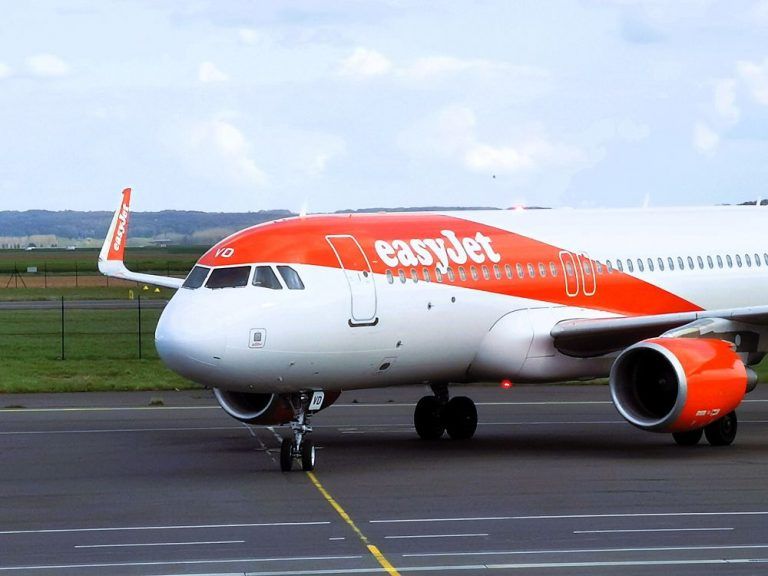
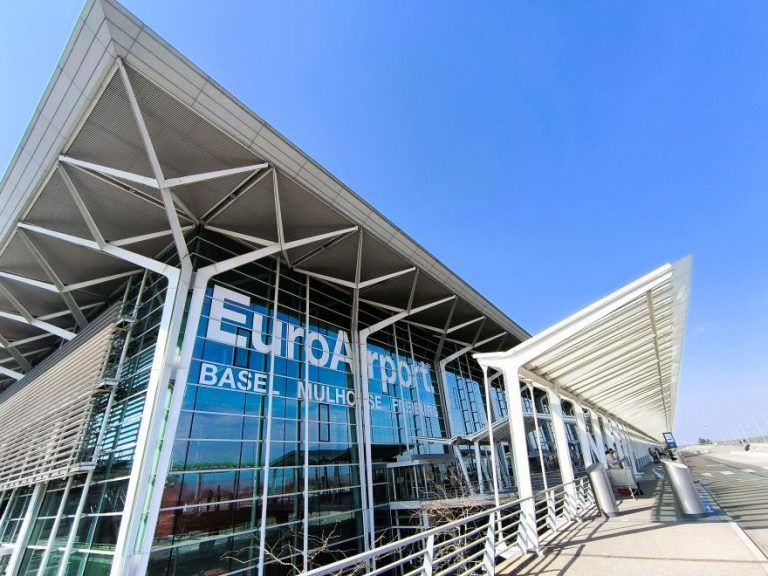
EuroAirport Basel-Mulhouse-Freiburg is celebrating its 80th anniversary at a pivotal moment in its history as the airport launched ambitious modernization plans for further develop its facilities.
May 8, 2026 marked officially the 80th anniversary of France-Switzerland binational airport’s inauguration. Since opening in 1946, the EuroAirport has evolved into one of Europe’s most distinctive examples of cross-border cooperation, serving Switzerland, France and, at a later stage, Germany from a single site on French territory.
Just months after the end of World War II, a temporary runway was rapidly constructed, allowing the first civil aircraft to land on May 2, 1946. The airport was formally inaugurated six days later, built on what was then considered both a pragmatic and visionary concept: creating a shared airport infrastructure for the trinational Upper Rhine region.
Over the decades, the EuroAirport has grown into a major economic and transportation hub connecting the region to destinations across Europe and beyond, while supporting thousands of jobs on both sides of the border.
Today, the airport is entering another major development phase. EuroAirport is investing more than €600 million in a long-term modernization program aimed at upgrading infrastructure, improving passenger experience and supporting more sustainable operations.
One of the first milestones is the ongoing refurbishment of the airport’s main runway, with work progressing on schedule. Airport management expects the runway to fully reopen no later than May 21, 2026. Another phase will be a first extension module (which focuses on the landside) of around 14 000 m² next to the east façade of the terminal. Construction is scheduled to begin in 2027, and the new building is due to be handed over in 2030/31.
However, as the EuroAirport looks toward the future, one strategic infrastructure project has once again hit turbulence: the planned rail link connecting the airport directly to regional train networks in Switzerland and France.
A plan for a rail connection as old as the airport itself
The idea of connecting EuroAirport Basel-Mulhouse-Freiburg to the rail network is almost as old as the airport itself. For more than seven decades, politicians, transport planners and regional authorities in France and Switzerland have discussed a direct train link to the airport. Yet the project has repeatedly faced delays, redesigns and funding challenges.
Early concepts emerged in the 1950s, proposing a railway spur from the existing Strasbourg–Basel rail corridor near Saint-Louis in France directly into the airport grounds. However, at the time, road access and private car ownership expanded rapidly across Europe, reducing the urgency for a rail solution.
The rail project returned to the political agenda in the 1980s as congestion around Basel intensified and environmental concerns became more prominent.
At EuroAirport was growing into a major international gateway for the region, authorities in Switzerland and France increasingly viewed a rail link as essential for sustainable mobility and for strengthening cross-border commuting. Studies during the 1990s explored integrating the airport into the future trinational Basel commuter train system network, allowing direct services from Basel, Mulhouse and Freiburg.
The Modern Project Takes Shape
By the 2000s, the rail connection evolved into a concrete infrastructure proposal known as the “Nouvelle Liaison Ferroviaire EuroAirport” (NLF EA).
The plan includes:
- A new rail branch of roughly six kilometers;
- A station directly underneath or adjacent to the airport terminal,
- Connections to the French national rail network,
- Integration with Basel’s regional S-Bahn services, particularly the S2 and S4 lines.
The objective is to allow passengers and airport employees to reach the airport directly by train without changing modes of transport.
Latest Setback in 2025–2026
Over the last two decades, the project received backing from regional governments in France, Switzerland and from German regional authorities in Baden-Württemberg.
Swiss officials, especially in Basel, have consistently argued the rail connection is critical to reducing road congestion and lowering carbon emissions around the airport.
Yet despite political support, the project has repeatedly stalled due to:
- Complex binational governance
- Environmental procedures
- Rising construction costs
- Disagreements over financing responsibilities
Originally estimated at around €100 million, costs have since risen to approximately €436 million.
Last year, French authorities announced a temporary suspension of their financial participation in the project, citing severe public budget constraints. Officials said the decision was intended to help secure additional European Union funding rather than abandon the project altogether.
The rail link had previously been expected to open around 2034–2035. Uncertainty now surrounds a possible opening date.
In the meantime, Basel-Mulhouse EuroAirport -despite its 9.6 million passengers in 2025 and its 6,000 employees, is the only airport in the region to miss a dedicated rail connection. Strasbourg airport with only 1.3 million passengers, Stuttgart with also 9.6 million passengers already have their train connection. But for Basel-Mulhouse, a train station integrated to the airport remains a distant dream.