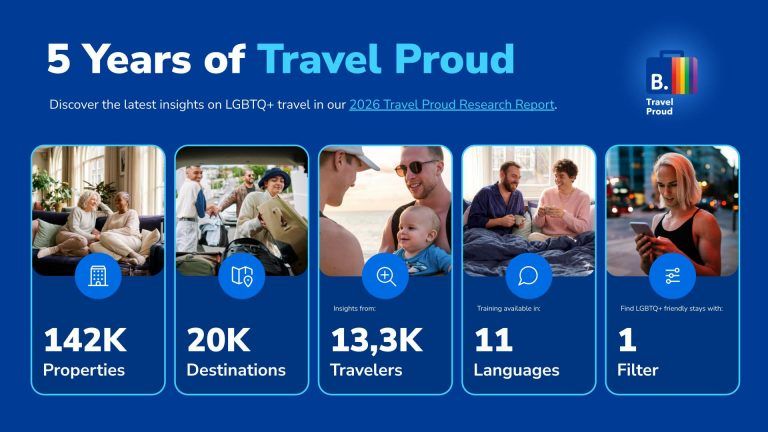
As June is globally celebrated as LGBTQ+ Pride month, commemorating the Stonewall Uprising in Manhattan, Booking.com has released its latest Travel Proud Research Report, the company’s most comprehensive and wide-ranging survey to date focused exclusively on the attitudes, behaviors, and experiences of LGBTQ+ travelers.
Based on insights from 13,300 LGBTQ+ travelers across 19 countries, the report highlights the diverse realities faced by different segments of the community.
Trade-offs LGBTQ+ travelers make to experience the world safely
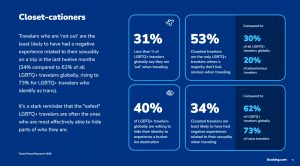
One of the report’s most notable findings is that LGBTQ+ travelers who report the fewest negative experiences and appear the most confident are those who identify as “not out.”
These travelers are the least likely to have experienced discrimination or other negative incidents related to their sexuality while traveling during the past 12 months (34%, compared with 62% of LGBTQ+ travelers globally and 73% of transgender travelers). They are also the only group in which a majority reported not feeling anxious when traveling (53%), compared with 30% globally and just 20% among poly-amorous travelers. It then underscore a difficult reality: the LGBTQ+ travelers who feel safest are often those most able to conceal aspects of their identity.
The decision to hide parts of one’s identity—whether by choice or necessity—remains common. Only 31% of respondents globally said they are out while traveling, compared with 68% who are out to close friends. The figure becomes even more significant when considering travel aspirations, with 40% saying they would be willing to hide their identity to visit a bucket-list destination. For many, exploring the world still requires weighing personal authenticity against perceived safety.
Precautions and anxiety rising, especially among trans travelers
The report found that 44% of LGBTQ+ travelers are taking more precautions today than they did a few years ago.
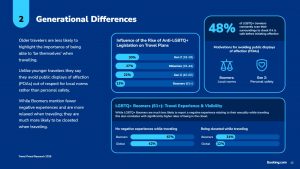
Common measures include sharing live locations with trusted contacts to reduce anxiety (25%), deleting dating apps before crossing borders (16%), using VPNs to access information or protect privacy online (19%), and carrying secondary phones (18%). Nearly half (48%) said they routinely assess their surroundings before showing affection to a partner in public.
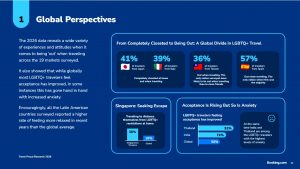
The data also highlights the distinct challenges faced by transgender travelers. They are the only group for whom the percentage reporting increased travel anxiety exceeds those who have become more relaxed in recent years. Some 43% said they have become more anxious about travel, compared with a global average of 27%.
While being out in public after dark is the most commonly cited source of anxiety among LGBTQ+ travelers overall (22% globally), transgender travelers identified the use of gender-specific facilities, such as bathrooms and changing rooms, as their leading concern (24%). This reflects a travel reality experienced with greater intensity than by many other groups.
How the industry and AI tools support LGBTQ+ traveler confidence
Despite these concerns, LGBTQ+ travelers reported significantly more positive than negative experiences overall. Globally, 82% said they had at least one positive experience related to their gender or sexual identity while traveling during the past year.
Examples included staff using correct pronouns (34%), visible signs of inclusivity such as Pride flags (32%), gender-neutral restrooms (32%), and interactions with LGBTQ+ staff members (32%). Overall, 58% of respondents believe acceptance has improved over the past several years.
The research also found that the same digital tools travelers use for safety precautions are increasingly viewed as valuable resources for trip planning, community connections, and destination research.
Two-thirds (66%) of LGBTQ+ travelers used AI tools to plan a trip during the past year. Among them, 43% said they trust AI to provide objective and non-judgmental travel advice related to their identity. Another 39% believe AI is effective at identifying niche LGBTQ+-friendly venues that may be difficult to find through traditional search methods.
Additionally, 37% said they feel more comfortable asking AI sensitive questions about local LGBTQ+ communities than asking another person, while 30% would like to see inclusion or LGBTQ+-friendly filters when booking travel online.
“This year’s research shows why our Travel Proud program continues to be as important as ever,” said Matthias Schmid, Senior Vice President of Accommodations at Booking.com.
“We’re encouraged by how the program has grown in the five years since launching in 2021 and by the strong support it has received from partners around the world. Training is now available in 11 languages and has been completed by more than 142,000 properties, enabling travelers to search for LGBTQ+-friendly accommodations in more than 20,000 cities and destinations worldwide.
“Despite ongoing challenges and the additional precautions many LGBTQ+ travelers take to feel safe, we are inspired by the 66% globally who prioritize trips where they can be completely themselves and continue to travel proudly and authentically.”