
Cambodia-Thailand agree on ASEAN monitoring but land borders stay closed
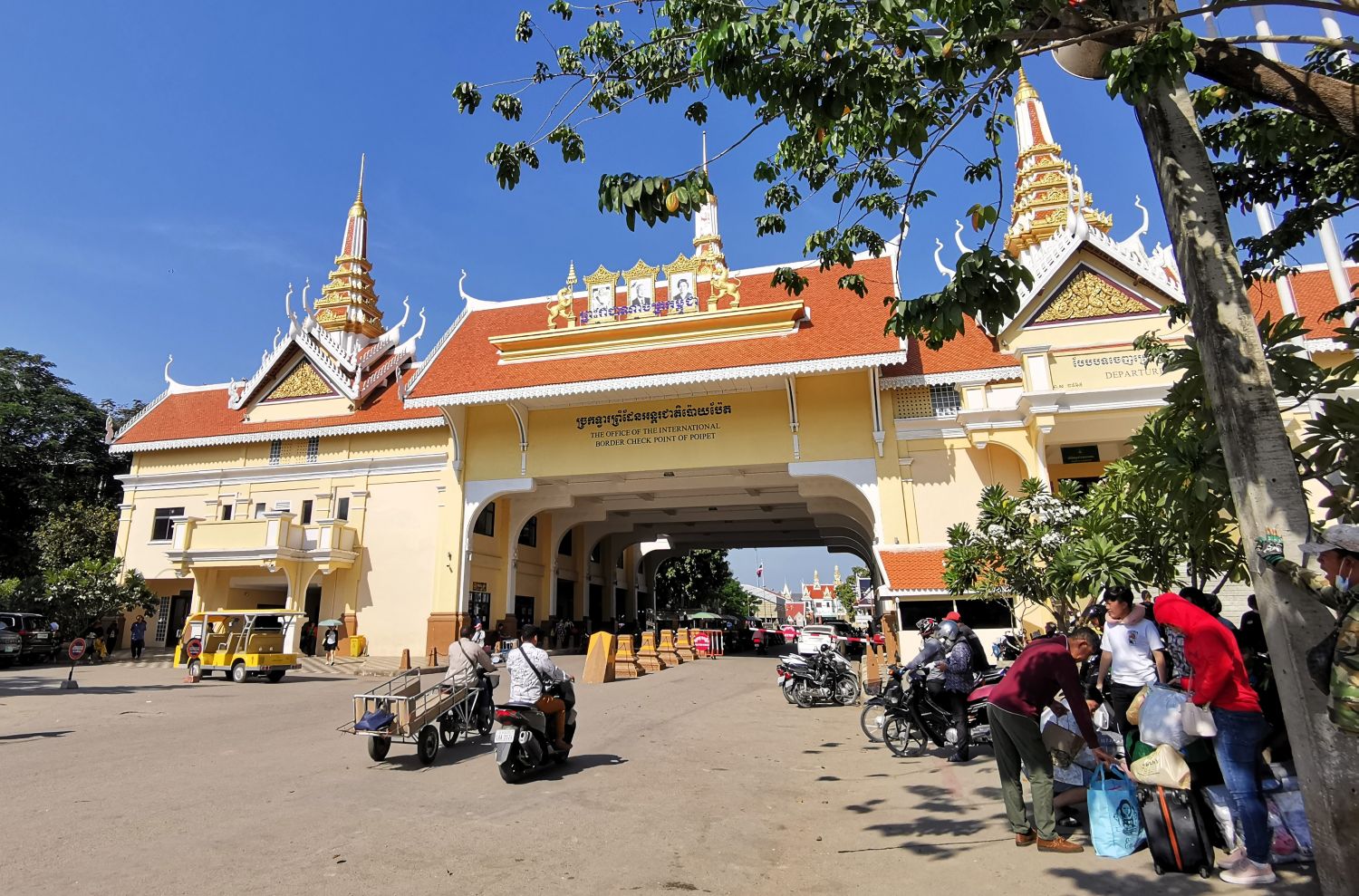
Cambodia and Thailand reached a new agreement on August 7 aimed at reinforcing a fragile ceasefire between the two neighboring kingdom. It will include the deployment of an interim team of ASEAN observers. They will monitor disputed border zones and the implementation of an 13-point ceasefire protocol.
The agreement follows a meeting of top defense officials from both countries in Kuala Lumpur. The 13-point pact commits to halt troop movements and weapons reinforcement along the contested frontier. It also prevents provocative actions that could escalate tensions, and curb the spread of disinformation. The deal finally calls for ASEAN defense attaches, led by Malaysia, to regularly observe ceasefire compliance on both sides.
“We are here to establish a detailed ceasefire arrangement to stop the bloodshed and suffering of soldiers and civilians alike,” Cambodian Defense Minister Tea Seiha said during a press briefing. “These steps are life-saving measures and lay the foundation for restoring trust and normal relations between our countries.”
The agreement followed three days of preliminary talks with China and the USA support. It builds on an unconditional ceasefire brokered in Malaysia on July 28. The agreement ended a five-day conflict that killed at least 43 people and displaced over 300,000 residents along the border.
Anger and fighting around borders’ demarcation on maps
Despite the progress, analysts warn the core dispute remains unresolved. The border tensions trace back decades to different interpretations of maps. Cambodia relies on six regional maps established by the French colonial power in 1907. They were agreed in a treaty between France and Siam that same year that ultra-nationalists in Thailand paint as “lost territories” ceded under pressure by Siam to French Indochina.
Cambodia’s old maps served as a reference in a 1962 International Court of Justice ruling the borders. These days, Thailand relies on a more detailed 1:50,000-scale map, similar to U.S. military charts. Its map shows every building and tree, which it argues better reflects the terrain. The maps’ dispute has fuels tension since the 1960s until today.
Cambodia views temples like Preah Vihear (Phra Viharn in Thai) and Prasat Ta Moan Thom (Prasat Ta Muen Thom in Thai) as vital Khmer heritage sites. Thailand claims the temples, emphasizing easier access and part of its own territory.
Nationalism-fueled feeling has escalated, with people treating the zones as worth dying for. The tension flared after a Cambodian soldier was killed in a skirmish on May 28, turning into a war-style confrontation in July. Academic observers generally believe that only “a long-term resolution should address the root causes of the dispute.”
Battering tourism in the region as borders remain closed
Meanwhile, the 13-point ceasefire protocol does not evoke any reopening of borders between both countries. In contrary, the protocol sees the possibility to exchange prisoners or allow people in case of medical emergency without crossing the border. The lockdown of the borders on both sides have dramatic consequences for tourism.
- Thailand
On the Thai side, hotels in border provinces such as Sa Keo, Sisaket or Surin experienced group booking cancellations ranging from 80% to 100%. Ubon Ratchathani province recorded 100% cancellation of tour group accommodations. In Buriram, Phanom Rung spectacular temple is closed. All racing events planned at Chang International Circuit are postponed.
Chanthaburi province reported 80% cancellations across its tourist spots, while Trat’s border areas have seen complete booking losses. Trat island destinations also face declines. Ko Chang experienced 10-30% cancellations, Ko Mak 20-30%, and Ko Kood 50-60%.
- Cambodia
Meanwhile, Cambodian provinces along the border are even more affected. Poipet virtually lost all the customers in its casinos and bars. All the border temples which are major heritage tourist attractions such as UNESCO listed Preah Vihear are banned for public visits and guarded by military units.
Access to Battambang or even Siem Reap is more complicated. Potential tourists coming by road before need now to fly either to Phnom Penh or Siem Reap. Many chose now to fly to Phnom Penh which offer cheaper flights than in Siem Reap.

Normalization remains a distant goal
While tourism is likely to return quicker to normalcy in Thailand, border provinces in Cambodia could face hardship for the weeks to come. As long as terrestrial borders remain closed.
With the fragile truce underscoring the deep mistrust still lingering between Cambodian and Thai troops stationed along the tense border, challenges for lasting peace in the region remain. And damage profoundly tourism perspectives in Western Cambodia.
Related News Stories: Can tourists visit Thailand and Cambodia as the conflict persists ? Are Cambodia/Thailand tensions turning into a full-fledged war? Thailand to enjoy better aviation connectivity with Europe this winter Air India, Singapore Airlines expand codeshare


TravelMole Editorial Team




















Vegas’s Billion-Dollar Secrets – What They Don’t Want Tourists to Know

Visit Florida’s New CEO Bryan Griffin Shares His Vision for State Tourism with Graham

Chicago’s Tourism Renaissance: Graham Interviews Kristin Reynolds of Choose Chicago

Graham Talks with Cassandra McCauley of MMGY NextFactor About the Latest Industry Research

Destination International’s Andreas Weissenborn: Research, Advocacy, and Destination Impact

Graham and Don Welsh Discuss the Success of Destinations International’s Annual Conference

Graham and CEO Andre Kiwitz on Ventura Travel’s UK Move and Recruitment for the Role

Brett Laiken and Graham Discuss Florida’s Tourism Momentum and Global Appeal

Graham and Elliot Ferguson on Positioning DC as a Cultural and Inclusive Global Destination

Graham Talks to Fraser Last About His England-to-Ireland Trek for Mental Health Awareness

Kathy Nelson Tells Graham About the Honour of Hosting the World Cup and Kansas City’s Future

Graham McKenzie on Sir Richie Richardson’s Dual Passion for Golf and His Homeland, Antigua







 ADS PRO
Global tourism exceeds 1.5 billion travelers announces UN-Tourism
Qatar Airways offers reduced timetable to over 60 destinations
WTTC global tourism reached record economic impact of 11 trillion in 2025
Hands In, UATP join forces for airline multi-card payments
Suspension of all regional trains in Catalonia following two new rail accidents in Spain