
Carnival close to getting new cruise terminal in Florida
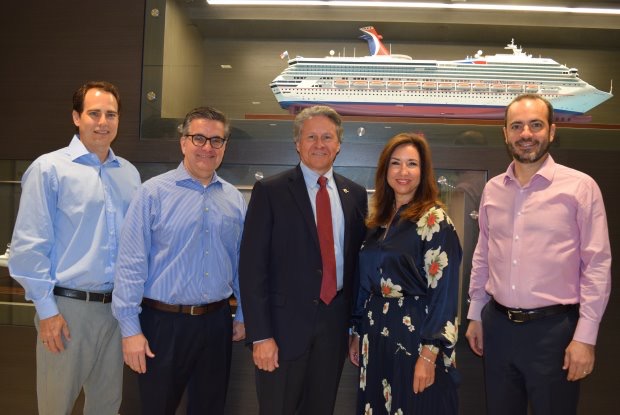
Executives from Carnival and the Canaveral Port Authority
Carnival Cruise Line has reached an agreement to build a new terminal in Florida to house the first North America-based ship to be powered by Liquefied Natural Gas.
The Canaveral Port Authority is expected to include the terms of the deal in its Commissioners’ meeting next week and, if approved, Carnival will be able to homeport the as-yet-unnamed 5,286-berth ship at Port Canaveral.
The 180,000-ton ship is the largest ever constructed by the cruise line and is set to join its fleet in 2020.
Carnival said the vessel will offer an array of ‘groundbreaking, never-before-seen’ features and attractions.
"We are very excited about the prospects of homeporting our largest ship at Port Canaveral, a valued business partner for more than 25 years," said president Christine Duffy
"Easily accessible from all over the southeast with excellent facilities and friendly staff, Port Canaveral is one of our most popular and fastest-growing homeports.
"This fantastic new ship, coupled with our future plans for Port Canaveral, will provide guests with an unparalleled seagoing vacation experience from the minute they arrive."


Linsey McNeill
Editor Linsey McNeill has been writing about travel for more than three decades. Bylines include The Times, Telegraph, Observer, Guardian and Which? plus the South China Morning Post. She also shares insider tips on thetraveljournalist.co.uk




















Vegas’s Billion-Dollar Secrets – What They Don’t Want Tourists to Know

Visit Florida’s New CEO Bryan Griffin Shares His Vision for State Tourism with Graham

Chicago’s Tourism Renaissance: Graham Interviews Kristin Reynolds of Choose Chicago

Graham Talks with Cassandra McCauley of MMGY NextFactor About the Latest Industry Research

Destination International’s Andreas Weissenborn: Research, Advocacy, and Destination Impact

Graham and Don Welsh Discuss the Success of Destinations International’s Annual Conference

Graham and CEO Andre Kiwitz on Ventura Travel’s UK Move and Recruitment for the Role

Brett Laiken and Graham Discuss Florida’s Tourism Momentum and Global Appeal

Graham and Elliot Ferguson on Positioning DC as a Cultural and Inclusive Global Destination

Graham Talks to Fraser Last About His England-to-Ireland Trek for Mental Health Awareness

Kathy Nelson Tells Graham About the Honour of Hosting the World Cup and Kansas City’s Future

Graham McKenzie on Sir Richie Richardson’s Dual Passion for Golf and His Homeland, Antigua







 ADS PRO
Higher departure tax and visa cost, e-arrival card: Japan unleashes the fiscal weapon against tourists
Euromonitor International unveils world’s top 100 city destinations for 2025
U.S.A. and Israel attacks on Iran impact air movements in the Gulf (Update 1.00pm CET)
Global tourism exceeds 1.5 billion travelers announces UN-Tourism
WTTC global tourism reached record economic impact of 11 trillion in 2025