
Climate change clock ticks on for tourism
Less than 30 years left for tourism as we know it
The world has about 30 years left before temperatures rise to risky levels if we continue to burn fossil fuels at the present rate, scientists warned in a landmark climate report.
Greenhouse gas emissions caused by human activity such as burning fuels like coal and gas were responsible for the majority of the "unequivocal" global warming that occurred over the past 60 years, the UN’s Intergovernmental Panel on Climate Change found.
Now they are on track to cause substantial shifts in global sea levels, ice cover and other parts of the climate system, which has already undergone changes that the panel said were "unprecedented" for thousands of years.
The UK’s Tyndall Centre for Climate Change Research, said the new findings were possible because of advances in understanding about the climate system.
"We had numbers in the previous [IPCC] report but they were based just on very simple analysis," she said. "Knowledge has improved about the way the climate responds to increasing carbon dioxide emissions."
The panel’s full report will not be released until next week but the scientists most responsible for drafting it, and officials from the 100-plus governments in the IPCC, issued a 36-page summary in Stockholm last Friday.
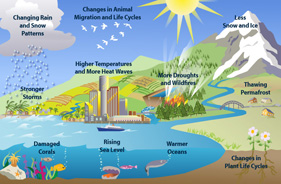
What do these findings mean for tourism? It’s simple – rising water levels will threaten beach resorts, increasing temperatures challenge skiing destinations, freak weather conditions will put a shadow on tourism generally.
What can be done?
The report says to retain a 66 per cent chance of preventing temperatures rising more than 2 degrees from the late 1880s, the world can only emit a further 300 gigatons of carbon. Because about 10 or 11 gigatons of carbon are released each year, that suggests there is less than 30 years before the 800 gigatons limit is breached.
So there will eventually be limits on greenhouse gas emissions. Most probably taxes of one sort or another on the burning of fossil fuels – in other words more expensive travel – particularly by air as airlines represent the majority of tourism-related emissions.
Valere Tjolle
NEW SUSTAINABLE/REAL TOURISM INFORMATION & OFFERS INCLUDING THE TOURISM AND CARBON MARKET REPORT HERE


Valere





















Vegas’s Billion-Dollar Secrets – What They Don’t Want Tourists to Know

Visit Florida’s New CEO Bryan Griffin Shares His Vision for State Tourism with Graham

Chicago’s Tourism Renaissance: Graham Interviews Kristin Reynolds of Choose Chicago

Graham Talks with Cassandra McCauley of MMGY NextFactor About the Latest Industry Research

Destination International’s Andreas Weissenborn: Research, Advocacy, and Destination Impact

Graham and Don Welsh Discuss the Success of Destinations International’s Annual Conference

Graham and CEO Andre Kiwitz on Ventura Travel’s UK Move and Recruitment for the Role

Brett Laiken and Graham Discuss Florida’s Tourism Momentum and Global Appeal

Graham and Elliot Ferguson on Positioning DC as a Cultural and Inclusive Global Destination

Graham Talks to Fraser Last About His England-to-Ireland Trek for Mental Health Awareness

Kathy Nelson Tells Graham About the Honour of Hosting the World Cup and Kansas City’s Future

Graham McKenzie on Sir Richie Richardson’s Dual Passion for Golf and His Homeland, Antigua







 ADS PRO
Higher departure tax and visa cost, e-arrival card: Japan unleashes the fiscal weapon against tourists
Singapore to forbid entry to undesirable travelers with new no-boarding directive
Euromonitor International unveils world’s top 100 city destinations for 2025
U.S.A. and Israel attacks on Iran impact air movements in the Gulf (Update 1.00pm CET)
Global tourism exceeds 1.5 billion travelers announces UN-Tourism