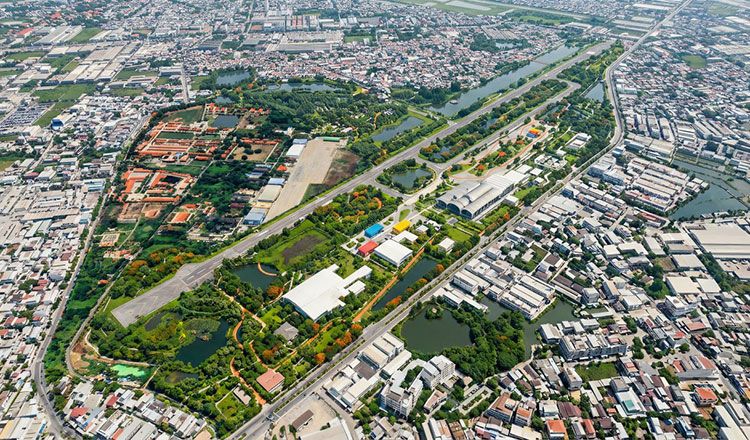
The revival of the 386-hectare former Phnom Penh International Airport at Pochentong has become a flagship project for Cambodia’s government, blending heritage preservation with forward-looking urban design.
First developed in the 1950s under King Norodom Sihanouk, the airport played a defining role in Cambodia’s post-independence era. It later stood as a silent witness to decades of upheaval before reopening the country to international travel in the 1990s. Today, the site remains a powerful symbol of resilience and renewal.
Speculation surged ahead of the September 2025 opening of Phnom Penh new Techo International Airport, with rumors suggesting the Pochentong land could be sold. Authorities swiftly shut that down, with Senate President Hun Sen and Prime Minister Hun Manet confirming plans to preserve and repurpose the site as a major civic asset.
At the heart of the proposal is a vast urban park—on a scale comparable to Central Park or Hyde Park—alongside an aviation museum honoring Sihanouk’s legacy and a retained runway for emergency use.
The project comes at a critical time for Phnom Penh. Green space in the Cambodian capital is severely limited, with studies showing just 1.1 square meters per person—far below the World Health Organization’s recommended 9 square meters. Nearly 95% of residents say they want more green areas. Existing parks are often private, leaving many lower-income communities with little access to public recreational space.
Helping to turn Phnom Penh into a green city
This is where the “Sponge City” concept takes center stage. Led by the Architects Association Khmer, the initiative re-imagines the former airport as a flood-resilient landscape designed to absorb rainwater, reduce urban heat, and improve air quality. Green spaces not only help mitigate flooding but also support physical health, social well-being, and economic vitality.
Beyond environmental gains, the redevelopment offers significant socioeconomic upside. Large urban parks are proven drivers of economic growth, boosting nearby property values and attracting investment. The Pochentong transformation is expected to create new commercial zones, support local businesses, and position the area as a prime real estate hub.
Design proposals are ambitious. One concept, dubbed “Oasis Garden,” envisions a green sanctuary filled with Cambodian flora, activity zones, and continuous walking and cycling paths. Features such as aviation-themed attractions, including simulators, and community spaces for vendors and events aim to turn the park into a year-round destination.
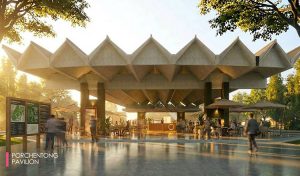
Adaptive reuse is another cornerstone. Former terminal buildings could be converted into museums, galleries, and office spaces, generating revenue to sustain operations while preserving the airport’s architectural legacy. Other proposals highlight cultural storytelling, transforming the site into a “travelogue” of Cambodia’s diverse landscapes.
Tourism is also expected to benefit. Much like Singapore’s urban green spaces, a park of this scale could become a must-visit attraction, drawing both domestic and international visitors while boosting hospitality and retail sectors.
Ultimately, the Pochentong redevelopment represents more than a green project—it’s a blueprint for Phnom Penh’s future. It could change the city image by redefining itself as a greener, more livable destination while setting a new benchmark for urban development in Southeast Asia.
As a first “taste” of the future, the airport has been opened again as a public park in conjunction with festivities linked to the Cambodian New Year. Phnom Penh Pochentong International Airport is open until April 19, operating daily between 5:00 AM and 9:00 PM. Visitors are able to walk through key areas that were once restricted, including: The main terminal building and iconic 1950s control tower, the VIP terminal zone, the apron and sections of the runway.