
Indonesia tightens safety protocols at Mount Rinjani after numerous fatal accidents
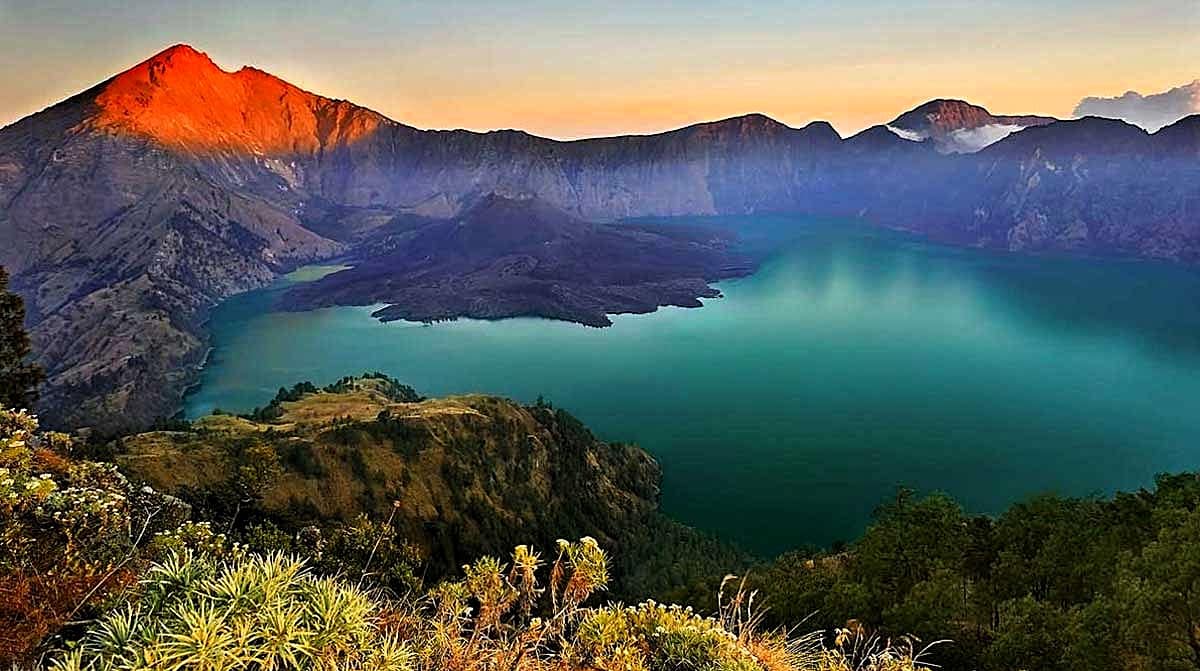
Indonesia’s Tourism Ministry has decided to step up supervision along the Mount Rinjani hiking trail, following a review of safety and supervision protocols with related parties. At a height of 3,276 m, Mount Rinjani is the second-highest volcano in Indonesia and the highest point in the province of West Nusa Tenggara. With its spectacular landscapes, Rinjani National Park is a major tourist destination for visitors to Lombok island.
The ministry’s review was prompted by the death of a Brazilian tourist while hiking on the trail, followed by a new accident four days later when a Malaysian climber slipped on a rocky section of the trail, near Lake Segara Anak. However, he did not suffered serious injuries.
In May of this year, another Malaysian hicker died after falling 100 meters from a cliff on the Torean trail at Mount Rinjani. Last year, a 16-year-old hiker from Jakarta also lost his life after falling from a cliff at Plawangan Sembalun. Rescuers recover his body eight days later, 200 meters below.
Rinjani, a beautiful but dangerous mountain
Commenting over the perils that Mount Rinjani represents, the ministry’s deputy for destination and infrastructure development, Hariyanto, declared : “We avoid these incidents from recurring. The ministry will increase supervision and evaluation to ensure all tourism activities in extreme tourist attractions follow applicable regulations and standards through monitoring by related elements.”
His ministry is coordinating with the Ministry of Forestry, the National Search and Rescue Agency (BASARNAS), and local governments to ensure the tightening of safety at all extreme tourist attractions, especially Mount Rinjani.
The supervision of certified travel agents, tour operators, and tour guides should also be stepped up to improve the safety and security aspects at extreme tourist attractions, he emphasized.
According to the official, the Tourism Ministry has also proposed the establishment of a rescue center and training for porters and mountain tour guides to build their rescue competencies.
“For medium-term follow-up, additional emergency communication equipment will be provided for transit posts, guides, porters, and others,” Hariyanto added.
Other efforts in the medium term will include the addition of emergency evacuation equipment at transit posts. Additional training is to be provided in emergency rescue for mountain tour guides and porters. Finally, the ministry will implement the digitalization of the Rinjani 360 Route for guidance materials for climbers.
In the long term, the government plans to build additional transit posts on the climbing route. Officials will provide each post with emergency rescue equipment, he said.
“We will also collaborate with BASARNAS to ensure that tour guides and porters have undergone safety and security training to provide first aid to tourists before rescue teams arrive,” he added.
(Source: ANTARA News Agency)


TravelMole Editorial Team



















Vegas’s Billion-Dollar Secrets – What They Don’t Want Tourists to Know

Visit Florida’s New CEO Bryan Griffin Shares His Vision for State Tourism with Graham

Chicago’s Tourism Renaissance: Graham Interviews Kristin Reynolds of Choose Chicago

Graham Talks with Cassandra McCauley of MMGY NextFactor About the Latest Industry Research

Destination International’s Andreas Weissenborn: Research, Advocacy, and Destination Impact

Graham and Don Welsh Discuss the Success of Destinations International’s Annual Conference

Graham and CEO Andre Kiwitz on Ventura Travel’s UK Move and Recruitment for the Role

Brett Laiken and Graham Discuss Florida’s Tourism Momentum and Global Appeal

Graham and Elliot Ferguson on Positioning DC as a Cultural and Inclusive Global Destination

Graham Talks to Fraser Last About His England-to-Ireland Trek for Mental Health Awareness

Kathy Nelson Tells Graham About the Honour of Hosting the World Cup and Kansas City’s Future

Graham McKenzie on Sir Richie Richardson’s Dual Passion for Golf and His Homeland, Antigua







 ADS PRO
Higher departure tax and visa cost, e-arrival card: Japan unleashes the fiscal weapon against tourists
Euromonitor International unveils world’s top 100 city destinations for 2025
U.S.A. and Israel attacks on Iran impact air movements in the Gulf (Update 1.00pm CET)
Global tourism exceeds 1.5 billion travelers announces UN-Tourism
WTTC global tourism reached record economic impact of 11 trillion in 2025