
‘Mindreader’ Meade gives industry sales boosting tips
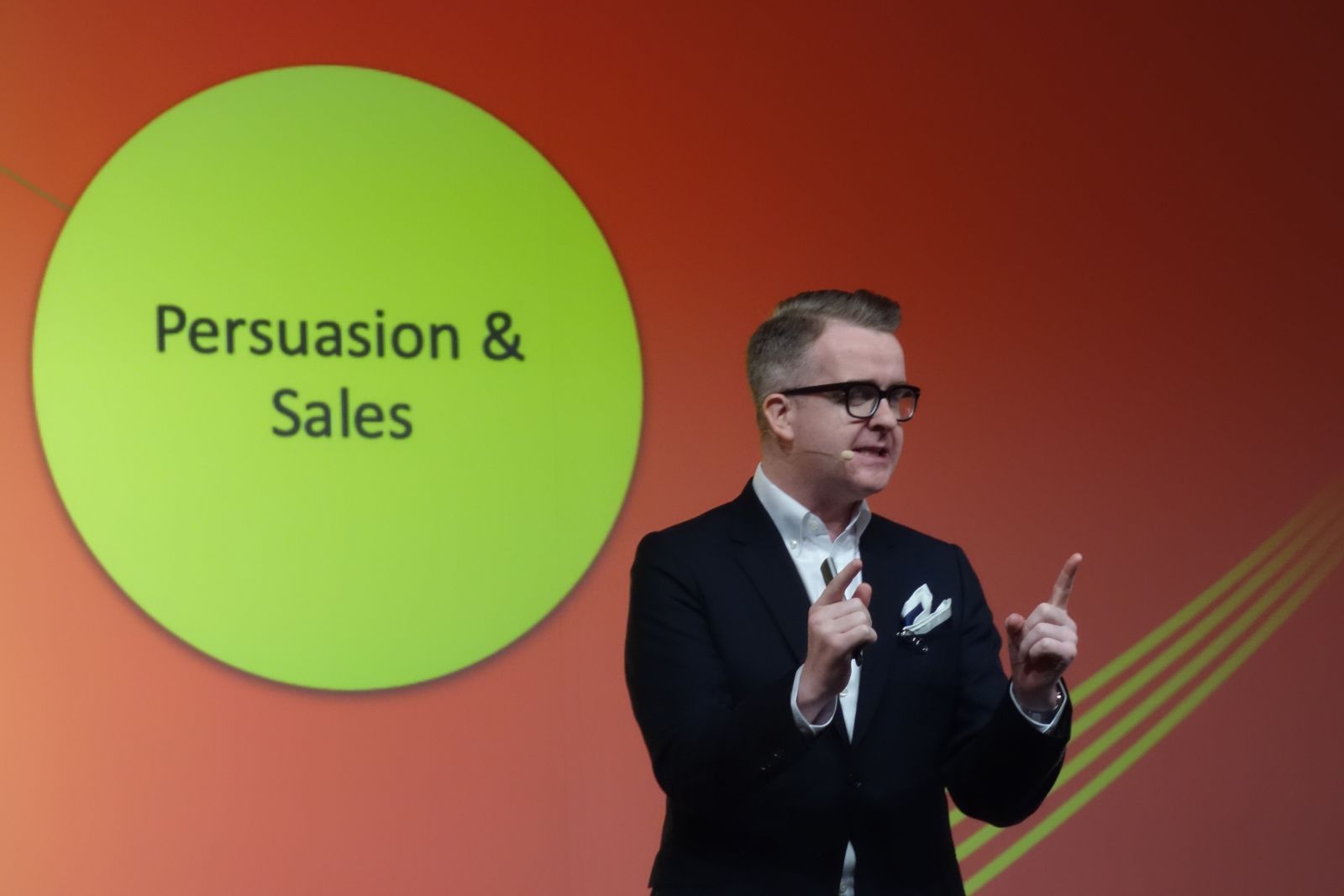
Make subtle changes to the way you speak to customers and you could get more bookings and sell more expensive holidays, according to ‘mindreader’ and TV presenter David Meade.
The former business lecturer and researcher turned entertainer shared his top selling tips on stage at the Advantage Conference in Cadiz.
As human beings are ‘not good at taking decisions’, he said, it’s possible to influence a customer’s choice. One of the ways to do this, he said, was always to present customers with the most expensive option first, reserving the cheapest option as something to fall back. This will increase your chances of getting ‘a yes’ by 180%, he claimed.
"People like to say yes, it releases endorphins, but always have a cheaper option to retreat to," said Meade, who has worked with major international brands, including Apple.
If you have several options for a client but one in particular you would like them to choose, ‘always always’ list this one third, said Meade. This is because humans can only completely retain three pieces of information, after which they fail to absorb all the details. We are also most likely to remember the information we were given last, so the option we will remember most clearly is ‘always, always’ option three, he said.
"Evidence shows whatever you talk about in number one will never live up their expectations, the second option is for education, they can’t make a decision so early in the process, but we can only hold three pieces of information in our minds at a time, like gold silver bronze, three wise men, father son holy ghost, so four options is too many to compare, four is information overload, and by five they only remember a small percentage of what you are saying.
"So always, always put your preferred option third. If you only have two options, make one up and put it at the start, they won’t choose it anyway."
If someone is comparing you against another provider, you should present your weaknesses at the start of your pitch and end with the more positive news, said Meade. This will make you 200% more likely to win the business, he claimed. "Always, always deal with bad news early, it makes you seem like an honest, transparent person. You become a trusted advisor, a point of information. By dealing with bad news early they are much more likely to pick up the phone to you in the future, but they might not do that if you just flog, flog, flog," he said.
Similarly, it’s better to emphasise to customers the loss they might incur by not taking a particular course of action, rather than the benefits of doing what you propose, said Meade. "As human beings we loved bad news, bad news is delicious to us, bad news is sticky and adhesive and it is seven times more likely to be retained and acted upon." Referencing Colgate’s decision in the 1960s to change its original adverts which showed customers with white teeth to showing how teeth might rot if people didn’t use its toothpaste, Meade said it used bad news to become the market leader.
"Instead of using losses or dangers, you can take the unique benefits of buying your package or working with you as a supplier and position those as benefits lost if they don’t use you," he said.
Agents can also harness human beings’ herd mentality’ to sell more holidays, said Meade. Using the example of a hotel which persuaded more guests to recycle their towels simply by stating on cards left in rooms that most other guests chose to re-use theirs, he said: "Talk about what is the biggest fastest selling destination. We want to do what everyone else is doing, so by simply telling them that this is where everyone is going is the most effective thing you can do."

Linsey McNeill
Editor Linsey McNeill has been writing about travel for more than three decades. Bylines include The Times, Telegraph, Observer, Guardian and Which? plus the South China Morning Post. She also shares insider tips on thetraveljournalist.co.uk












Vegas’s Billion-Dollar Secrets – What They Don’t Want Tourists to Know

Visit Florida’s New CEO Bryan Griffin Shares His Vision for State Tourism with Graham

Chicago’s Tourism Renaissance: Graham Interviews Kristin Reynolds of Choose Chicago

Graham Talks with Cassandra McCauley of MMGY NextFactor About the Latest Industry Research

Destination International’s Andreas Weissenborn: Research, Advocacy, and Destination Impact

Graham and Don Welsh Discuss the Success of Destinations International’s Annual Conference

Graham and CEO Andre Kiwitz on Ventura Travel’s UK Move and Recruitment for the Role

Brett Laiken and Graham Discuss Florida’s Tourism Momentum and Global Appeal

Graham and Elliot Ferguson on Positioning DC as a Cultural and Inclusive Global Destination

Graham Talks to Fraser Last About His England-to-Ireland Trek for Mental Health Awareness

Kathy Nelson Tells Graham About the Honour of Hosting the World Cup and Kansas City’s Future

Graham McKenzie on Sir Richie Richardson’s Dual Passion for Golf and His Homeland, Antigua







 ADS PRO
Global tourism exceeds 1.5 billion travelers announces UN-Tourism
Qatar Airways offers reduced timetable to over 60 destinations
WTTC global tourism reached record economic impact of 11 trillion in 2025
Hands In, UATP join forces for airline multi-card payments
Overseas travelers to the United States declined by 2.5% in 2025