
New African country wildlife treasure
Last Sunday, more than 3 million people in Southern Sudan started to vote in a referendum to create a nation in Eastern Africa.
As they do, there is a historic opportunity, perhaps unprecedented, for wildlife conservation, sustainable natural resource management and environmentally friendly ecotourism to be integrated into the nation-building process.
Land-use issues loom large in the election. Vast oil deposits in Southern Sudan account for roughly 98% of the region’s revenues and will come under the south’s management if it becomes a separate country. The White Nile flows through Southern Sudan toward Khartoum, adding water to the region’s resource issues.
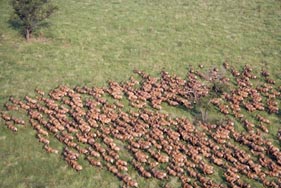
The hidden jewel in this unique landscape is its stunning wildlife. Before civil war broke out in 1983, Southern Sudan boasted some of the most spectacular and important wildlife populations in Africa and the world’s second-largest wildlife migration of some 1.3 million antelope.
Large populations of buffalo, antelope, elephants and chimpanzees were neglected and presumed lost during the two-decade war.
At the request of the provisional government of Southern Sudan, the Wildlife Conservation Society surveyed the country for wildlife in 2007, thanks to funding from USAID and the U.S. Fish & Wildlife Service. The magnificent antelope migration and vast tracts of savannas, wetlands and woodlands remained largely intact.
The government’s task now is to establish conservation and sustainable natural resource management as part of the region’s development strategy.
The case for conservation is clear: The protection of parkland and wildlife must be a rallying point for Southern Sudan. Animal migrations, along with pristine savanna and wetland habitat, could become one of the greatest tourism attractions in Africa and a key component of Southern Sudan’s growth and economic security.
Local communities live off the land and depend upon its management for their livelihoods. Integrating conservation in land-use planning offers hope to those most in need.
A sound conservation and resource management agenda will secure centuries-old wildlife migrations, along with great savannas and wetlands, for all humankind. Just as important, it will enable the people and government of Southern Sudan to move toward a free and stable democratic nation.
Source: Steven Sanderson CNN
Valere Tjolle
Valere Tjolle is editor of the Sustainable Tourism Report Suite 2011 – latest news on the suite at
www.travelmole.com/stories/1145712.php


Valere



















Vegas’s Billion-Dollar Secrets – What They Don’t Want Tourists to Know

Visit Florida’s New CEO Bryan Griffin Shares His Vision for State Tourism with Graham

Chicago’s Tourism Renaissance: Graham Interviews Kristin Reynolds of Choose Chicago

Graham Talks with Cassandra McCauley of MMGY NextFactor About the Latest Industry Research

Destination International’s Andreas Weissenborn: Research, Advocacy, and Destination Impact

Graham and Don Welsh Discuss the Success of Destinations International’s Annual Conference

Graham and CEO Andre Kiwitz on Ventura Travel’s UK Move and Recruitment for the Role

Brett Laiken and Graham Discuss Florida’s Tourism Momentum and Global Appeal

Graham and Elliot Ferguson on Positioning DC as a Cultural and Inclusive Global Destination

Graham Talks to Fraser Last About His England-to-Ireland Trek for Mental Health Awareness

Kathy Nelson Tells Graham About the Honour of Hosting the World Cup and Kansas City’s Future

Graham McKenzie on Sir Richie Richardson’s Dual Passion for Golf and His Homeland, Antigua







 ADS PRO
Global tourism exceeds 1.5 billion travelers announces UN-Tourism
Qatar Airways offers reduced timetable to over 60 destinations
WTTC global tourism reached record economic impact of 11 trillion in 2025
Hands In, UATP join forces for airline multi-card payments
Suspension of all regional trains in Catalonia following two new rail accidents in Spain