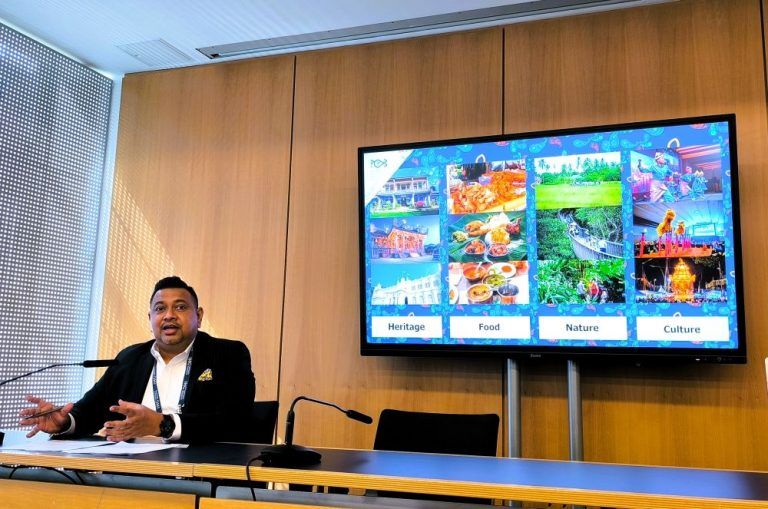
Speaking in May at a press conference during IMEX Frankfurt, Ashwin Gunasekeran, CEO of the Penang Convention and Exhibition Bureau (PCEB), showed its confidence into Penang continuous success in the MICE sector. The CEO highlighted the Malaysian destination’s accelerating momentum in the global business events sector and outlined a series of strategic initiatives designed to sustain long-term growth.
Gunasekeran said Penang continues to strengthen its positioning as Malaysia’s “Silicon Powerhouse,” supported by more than 470 multinational companies across healthcare, advanced manufacturing, electronics and digital innovation. This industrial base, he noted, is fueling consistent demand for association meetings, incentives and corporate events.
Facts proved him right. In 2025, Penang delivered its strongest-ever performance for business events, hosting 3,391 events—up 64.7% year-on-year. The destination welcomed more than 450,000 delegates, generating an estimated RM1.91 billion (USD470.5 million) in economic impact.
A key driver of future growth is new infrastructure development, including the Penang Waterfront Convention Centre at The Light City development. The purpose-built venue offers over 10,000 square meters of event space and capacity for up to 10,000 delegates.
Gunasekeran also spotlighted PCEB’s “Penang Inspiring Meetings” recent campaign, which focuses on immersive event design blending business with culture, heritage and gastronomy.
Sustainability and infrastructure expansion strengthen Penang
Sustainability remains central to Penang’s strategy. The state promotes green mobility and plastic-free initiatives, while the Setia SPICE Convention Centre continues to stand out as the world’s first hybrid solar-powered convention facility. Delegates are also increasingly engaged in CSR activities linked to turtle conservation and coral reef protection programs.
PCEB is also marking its 10th anniversary in 2026 with enhanced support schemes for meetings, incentives and exhibitions. Gunasekeran emphasized a highly flexible approach, noting the bureau is focused on tailoring solutions to client needs.
New initiatives include the BE Associates program, which connects hospitality and tourism students with industry leaders through mentoring and volunteering opportunities.
From an infrastructure position, Malaysia Airports Bhd approved and started to expand Penang International Airport, boosting capacity to 12 million passengers. The future expanded terminal should open in 2028, representing a total investment of USD296 million.
Another essential infrastructure project is the construction of Penang first LRT line. The 29.5 km Penang Light Rail Transit is slated for completion by December 2031. It will feature 21 stations connecting Silicon Island (Penang South Reclamation) to Komtar on the island via the airport, as well as Penang Sentral train station in Butterworth on the mainland.
Looking ahead, Gunasekeran is looking at the Penang International Travel Exchange and the BE@Penang Conference later this year, further strengthening its international profile. Confidence remains high. Asked about potential impact of the current turmoil in the Gulf, PCEB CEO highlighted that Penang has seen no event cancellations and remains confident in continued international growth.