Germany’s aviation sector received a significant boost at the International Aerospace Exhibition (ILA) in Berlin on June 10, 2026, at the opening day. Chancellor Friedrich Merz unveiled the federal government’s new Aviation Strategy, replacing the previous framework introduced in 2014.
The strategy is designed to strengthen Germany’s position as a leading global aviation nation while improving competitiveness, innovation, sustainability, and resilience across the sector.
Speaking at the event, Merz described aviation and aerospace as one of Germany’s key industries of the future. “At the center of our strategy are competitiveness and innovation in one of the most important future industries of our country,” he said.
The new framework aims to secure and further develop Germany as a strong aviation hub while ensuring that both Germany and Europe remain among the world’s leading aviation regions.
For the first time, the strategy takes a comprehensive approach by integrating commercial aviation, the aviation industry, and military aviation into a single policy framework. According to the Chancellor, the plan identifies the most important priorities and measures needed to support the sector’s long-term growth.
Merz highlighted the strong performance of Germany’s aerospace industry, which recorded 19% growth in 2025 and reached a record employment level of 130,000 workers. He emphasized that innovation in aviation is closely linked to national sovereignty, security, and future economic strength.
The Chancellor also acknowledged the significant challenges facing airlines and the broader aviation industry. To address these issues, the government has introduced a package of measures aimed at reducing costs and improving competitiveness.
The measures include eliminating the e-kerosene quota requirement, reducing air navigation service charges, reversing the most recent increase in aviation taxes, and assuming responsibility for air traffic control costs at Germany’s regional airports.
According to Merz, the package will reduce costs for the German aviation sector by approximately €500 million. He added that the government will continue monitoring market conditions and evaluate whether further support measures are required. A dedicated steering group within the federal government will oversee implementation of the new Aviation Strategy to ensure that the announced measures are delivered.
German airports pleased but expect more concrete steps
The announcement was welcomed by the German Airports Association (ADV), which described the strategy as an important signal for the future of Germany’s aviation sector. ADV President Aletta von Massenbach said the strategy marks a major shift by recognizing aviation as a strategic sector that contributes to competitiveness, resilience, sovereignty, and sustainability.
“The federal government is sending an important industrial and location policy signal,” von Massenbach said. “Recognizing airports as strategic infrastructure is both necessary and overdue. Aviation is not a peripheral issue—it is essential for economic strength, international connectivity, resilience, and the ability of the state to act effectively.”
She noted that demand for air travel remains strong, with travelers continuing to fly for vacations, business trips, family visits, and cultural experiences. Maintaining a comprehensive network of airports and air routes is therefore essential, she said, while inbound tourism to Germany also depends heavily on global air connectivity.
ADV stressed that implementation will now be critical. While the strategy outlines ambitious goals, the association said these must be backed by concrete measures to improve competitiveness. High government-imposed costs continue to place pressure on both airlines and airports, making further action on aviation taxes, air traffic control charges, and aviation security fees particularly important.
The association also welcomed the strategy’s focus on resilience, digitalization, and sustainable transformation. Airports across Germany are already investing heavily in climate protection initiatives, ground power systems, digital technologies, and modern security infrastructure.
Emirates, a test about German government’s positive approach to air connectivity ?
ADV further called for expanded international air traffic rights, arguing that Germany must adopt a more open and strategically focused aviation policy to compete effectively with European and global hub airports. The association said greater connectivity would strengthen regional economies, improve competitiveness, and support long-term growth.
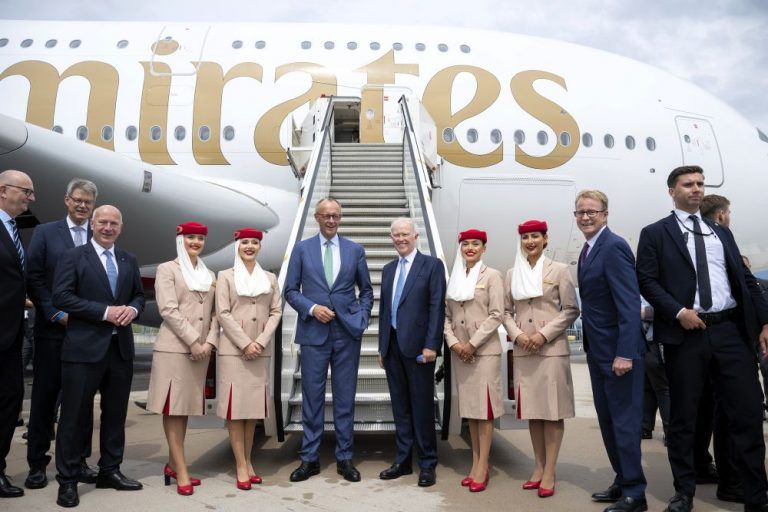
A first step of the German government willingness to strengthen Germany’s air transport central role comes from Dubai carrier Emirates. Adding further weight to calls for improved international connectivity, Emirates wants to launch daily services to both Berlin and Stuttgart, subject to approval from Germany’s Federal Ministry of Transport.
The Dubai-based carrier says it is prepared to invest more than €100 million annually in operations and introduce daily widebody flights to the two cities, which it believes remain underserved by long-haul international services despite their economic importance.
“These are two of Germany’s most important economic centers, yet both remain underserved when it comes to long-haul connectivity. German businesses have told us they need it, the Berlin Chamber of Commerce has called for it, our own data confirms the demand is there and flights are forecast to be full,” said Sir Tim Clark, President of Emirates Airline.