Ryanair CEO Michael O’Leary told last week that prolonged disruption in the Middle East could trigger serious financial pressure across Europe’s airline sector, with some carriers potentially facing collapse if fuel prices remain elevated.
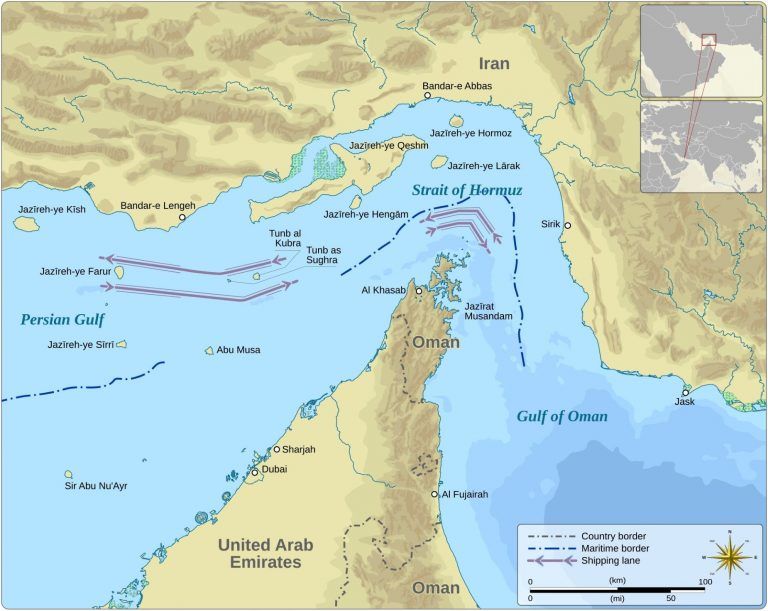
Speaking from Dublin with the information reported by Italian newspaper Il Sole 24 Ore, O’Leary said the closure of the Strait of Hormuz following the conflict involving Iran has already added $50 million to Ryanair’s fuel bill in April alone.
If oil remains around $150 per barrel, he estimates that extra cost could climb to $600 million over the next 12 months.
According to Il Sole 24 Ore, Ryanair boss said uncertainty over summer jet fuel supply is now his biggest concern, as the airline monitors availability for its 648-aircraft fleet.
Summer Fuel Supply Still Unclear
According to O’Leary, if the conflict ends by late April or early May, Europe is unlikely to face major supply issues during the peak summer travel season. However, if tensions continue, the outlook becomes far less predictable.
“At the moment, suppliers believe May should be fine, but from June onward there is real uncertainty,” he said. “If fuel does not arrive, flights cannot operate. That becomes a much bigger problem than simply paying more.”
He warned travelers not to delay booking summer holidays, suggesting reduced capacity and cancellations could follow if shortages worsen.
Even if the conflict were resolved immediately, O’Leary believes it would still take three to four months for fuel markets to stabilize and for prices to ease back below $100 per barrel.
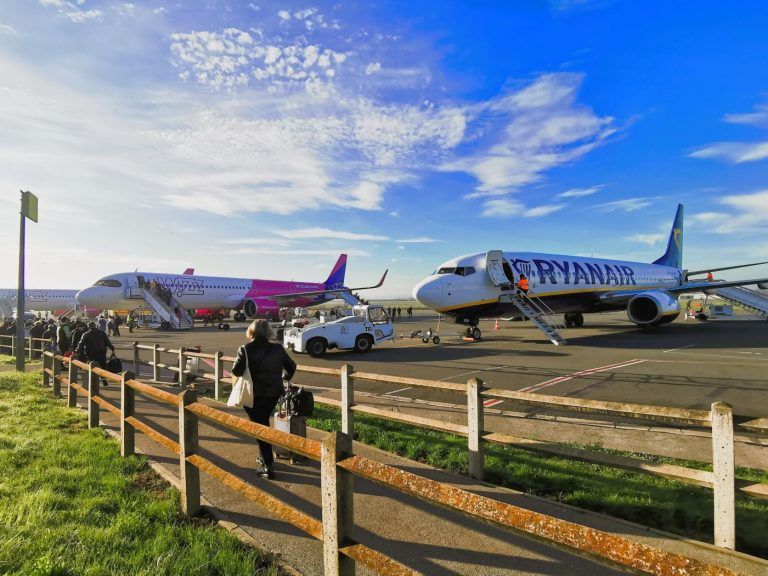
Ryanair sees airBaltic and Wizz Air vanishing…
Ryanair has protected itself by hedging around 80% of its fuel requirements at $67 per barrel through March 2027. The remaining 20%, however, must be bought at current market prices, which have jumped from around $74 per barrel before the conflict to nearly $150.
O’Leary says that level is unsustainable for some competitors. He believes two or three European airlines could run into serious financial trouble by the end of 2026, specifically highlighting Wizz Air and airBaltic as vulnerable carriers.
His view is that airlines without sufficient fuel hedging could burn through reserves by the fourth quarter and, if liquidity dries up, may be forced to suspend operations.
He said such failures would ultimately strengthen Ryanair’s competitive position by reducing market capacity.
Wizz Air rejects bankruptcy fears
Wizz Air has strongly dismissed O’Leary’s assessment. The Budapest-based airline said it remains financially solid and has enough liquidity to continue operating for at least 18 months, even under difficult market conditions.
Talking at the CAPA leaders Summit in Berlin at the end of last week, Wizz Air CEO József Váradi, shared a clear and pragmatic strategy in times of uncertainty. With 70% of fuel hedged for the next six months, the airline is well-positioned to manage volatility. There is no intention to cancel flights—but flexibility remains key, with the remaining 30% unhedged capacity offering room for adjustment if needed.
airBaltic under great pressure
Latvia’s airBaltic appears to be in a more fragile position. The airline, which flies an all-Airbus A220 fleet of 55 aircraft, recently saw its credit rating lowered by S&P Global as well as Fitch Ratings despite receiving short-term financial support from the Latvian government.
In a statement, Fitch Ratings explained the downgrade reflects airBaltic’s very weak financial flexibility and acute liquidity pressure, which, absent additional external support, could lead to a liquidity crisis within the next six to 12 months. Fitch estimates the company will require a large equity injection to sustain operations through 2026 with further government backing.
Ryanair still forecasting growth
Despite the geopolitical risks, Ryanair is of course predicting a bright future for… itself! The airline maintains its passenger growth targets, expecting 216 million passengers in 2026 and between 222 and 223 million in 2027.
O’Leary said trading had been extremely strong before the latest crisis escalated. “Everything was going very well, and then global politics changed the picture overnight.”
Ryanair has not revised its financial guidance, although O’Leary acknowledged that predicting profits remains difficult given the lack of visibility on fuel prices in the coming months.