
“Connecting the Dots for Siem Reap tourism”: Interview with Nikolas Hatz, Project Director Siem Reap Tourism Alliance
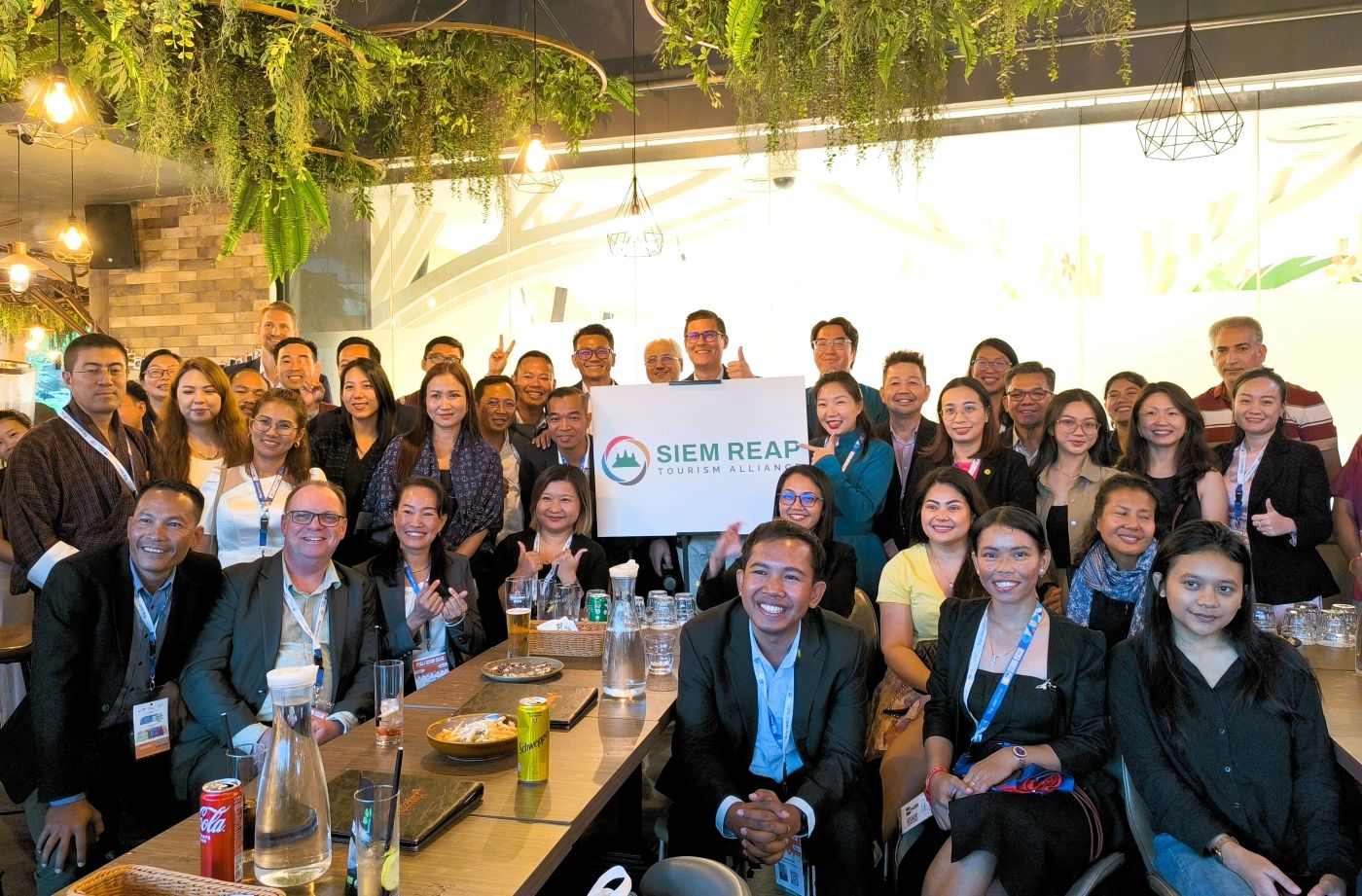
ITB Asia in Singapore saw the official launching of the Siem Reap Tourism Alliance (STA), which regroups tour operators and tourism providers of the northwestern region, home to the fabled temples of Angkor. For Nikolas Hatz, Project Director of STA, the Singapore presentation and networking reception is about putting Cambodia tourism firmly on the world map.

When did the idea for the Siem Reap Tourism Alliance first take shape? How did it come about—and why Siem Reap in particular?
Nikolas Hatz – It actually wasn’t my personal idea. The concept came from Cambodian tourism providers and tour operators who had been working together for two to three years under a support program run by GIZ, the German Development Agency. Through a series of workshops, study trips, and trade fair participations, GIZ helped local operators understand how destination promotion works. More importantly, that gave them the confidence to be proud of Siem Reap, proud of Cambodia, and ready to promote their destination together.
My role was more that of a coach or advisor—helping guide the process, offering ideas, and supporting them as they developed the structure themselves.
But pride in Siem Reap is already very strong—after all, it’s home to Angkor Wat, which every Cambodian cherishes. What exactly needs to change?
Nikolas Hatz – That’s a great question. We’re not trying to change anything. We’re simply adding to what’s already there. Cambodians are indeed deeply proud of Angkor Wat, of Siem Reap, and of their heritage. What we aim to do through the Siem Reap Tourism Alliance, or STA, is to take that pride. And project it outward—to share it with the world.
Beyond promotion, are you also looking at helping to enhance the tourism product in Siem Reap? Visitor numbers to Angkor Wat have been declining over the past two years. How can the destination regain momentum?
Nikolas Hatz – We believe strongly in partnerships—and in the power of collaboration. STA’s goal isn’t to replace or duplicate existing programs, but to connect the dots between what’s already happening. For instance, if training programs already exist, we won’t create new ones. Instead, we’ll work to link these efforts together and help bring a broader, more coordinated perspective to destination development and marketing.
Do you think Siem Reap’s tourism sector needs more creativity—new ideas, new experiences? Is that part of STA’s role?
Nikolas Hatz – What I’ve seen in Cambodia is already incredibly creativity and innovation. Our role at STA isn’t to create new products ourselves, but to showcase what already exists—to tell the world about the great ideas and experiences that are already being developed by Cambodian operators. We’ll act more as a connector and amplifier, helping those local innovations reach international audiences.
Will the Siem Reap Tourism Alliance also engage with international or regional tour operators?
Nikolas Hatz – The Siem Reap Tourism Alliance is not an association. It will then operate differently from a traditional association. We’ll be demand-driven and evidence-based—meaning we’ll participate in international events or exhibitions only when our member operators and providers decide it makes sense. They’ll have the final say. If they believe an event aligns with their goals, STA will absolutely support and represent them there.
Cambodia has recently faced challenges, including reduced cross-border travel from Thailand due to tensions. Given that, is this really the right moment to launch an initiative like STA?
Nikolas Hatz – Actually, I believe this is the perfect moment. The alliance represents collaboration and unity—not just within Cambodia, but across the wider Greater Mekong Sub-region.
A recent GIZ study found that about 50% of tourists visiting Cambodia enter through Thailand. That tells us clearly that travelers from long-haul markets see the region as one interconnected destination. 80 to 90% of Western travelers are actually looking at multi-country itineraries—they wanted to explore more of the region, not just one country.
For Cambodia, this insight highlighted both a challenge and an opportunity right now. So yes, even with the current political context, it’s the right time to strengthen those regional links. Once cross-border movement normalizes again, this kind of cooperation will be essential to help the entire region grow together.
In short, how would you define STA’s mission?
Nikolas Hatz – To put it simply: STA’s mission is to connect, collaborate, and communicate. We want to connect the tourism players within Cambodia and across the Mekong region, collaborate on shared goals, and communicate to the world that Siem Reap and Cambodia are vibrant, creative, and ready to welcome the next generation of travelers.
Related News Stories: Olympic Holidays - TravelMole Visit Orlando - TravelMole


TravelMole Editorial Team













Vegas’s Billion-Dollar Secrets – What They Don’t Want Tourists to Know

Visit Florida’s New CEO Bryan Griffin Shares His Vision for State Tourism with Graham

Chicago’s Tourism Renaissance: Graham Interviews Kristin Reynolds of Choose Chicago

Graham Talks with Cassandra McCauley of MMGY NextFactor About the Latest Industry Research

Destination International’s Andreas Weissenborn: Research, Advocacy, and Destination Impact

Graham and Don Welsh Discuss the Success of Destinations International’s Annual Conference

Graham and CEO Andre Kiwitz on Ventura Travel’s UK Move and Recruitment for the Role

Brett Laiken and Graham Discuss Florida’s Tourism Momentum and Global Appeal

Graham and Elliot Ferguson on Positioning DC as a Cultural and Inclusive Global Destination

Graham Talks to Fraser Last About His England-to-Ireland Trek for Mental Health Awareness

Kathy Nelson Tells Graham About the Honour of Hosting the World Cup and Kansas City’s Future

Graham McKenzie on Sir Richie Richardson’s Dual Passion for Golf and His Homeland, Antigua







 ADS PRO
Phocuswright reveals the world's largest travel markets in volume in 2025
Higher departure tax and visa cost, e-arrival card: Japan unleashes the fiscal weapon against tourists
Singapore to forbid entry to undesirable travelers with new no-boarding directive
Euromonitor International unveils world’s top 100 city destinations for 2025
Cyclone in Sri Lanka had limited effect on tourism in contrary to media reports