
Singapore looks at further improving its world-class tourism status
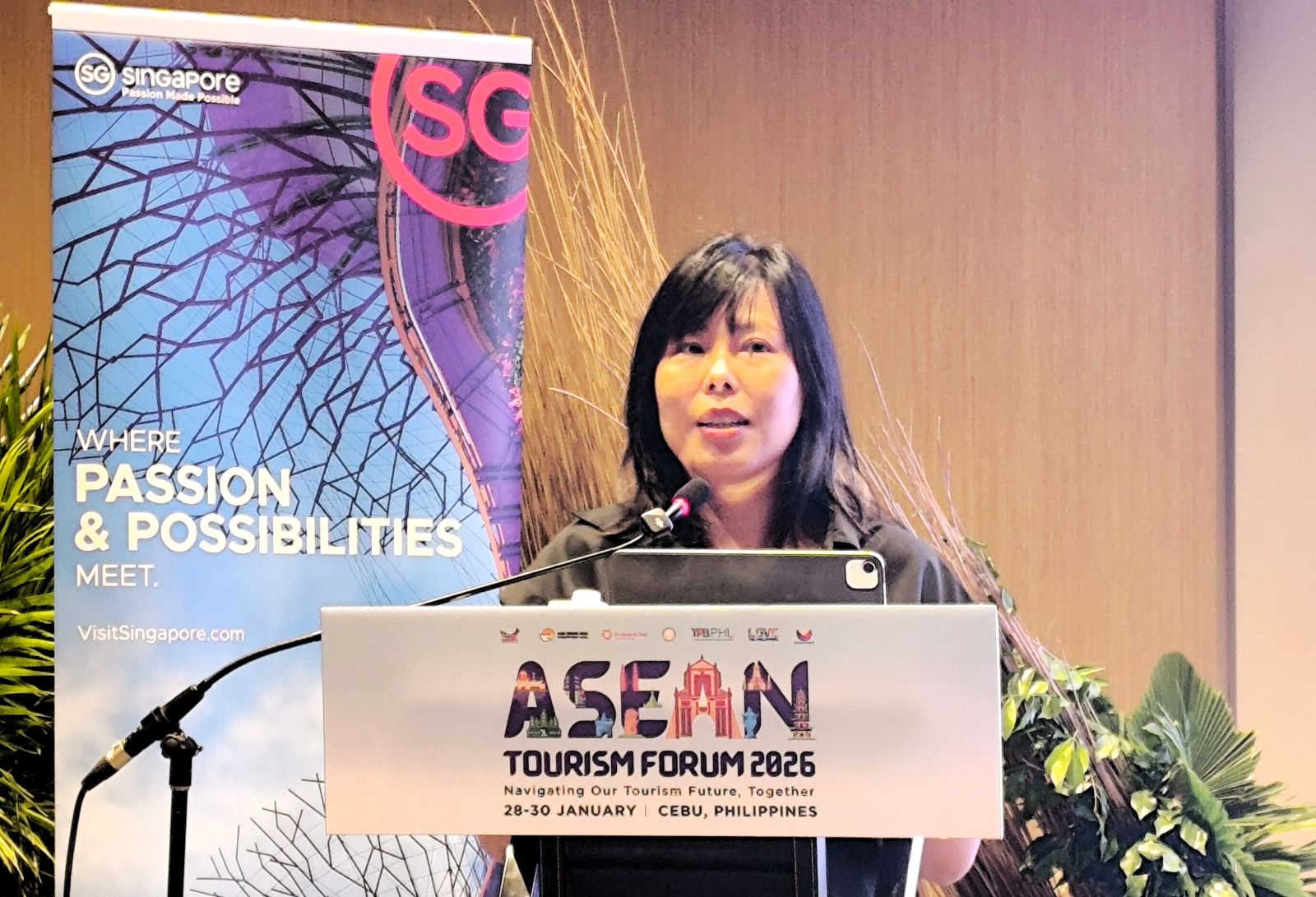
Singapore’s tourism sector delivered a steady performance in 2025 despite global economic and geopolitical uncertainties. The destination is laying the groundwork for a long-term transformation focused on quality growth and high-value visitors, told the Singapore Tourism Board at a press conference during the ASEAN Tourism Forum in Cebu.
From January to November 2025, Singapore welcomed 15.5 million international visitors, a 3 percent year-on-year growth, reflecting a normalization after post-pandemic surges. Singapore expects to have reached a total of 17 to 18 million arrivals last year.
Tourism receipts continued to outperform arrivals reflecting the destination strategy of higher yield travelers. From January to June alone, receipts reached US$12.2 billion, marking 5 percent growth compared with the same period in 2024. The country expects to achieve receipts of 22.5 to 23.5 billion USD for the whole year 2025. By 2040, Singapore expects tourism to generate receipts between 35 to 40 billion USD.
“Our focus has been very deliberate,” said Su Min Kwan, Director of Communications and Marketing Group at the Singapore Tourism Board (STB). “We are pursuing quality over volume, growing tourism receipts at a faster pace than visitor arrivals. From an economic perspective, higher-yield visitors matter more than simply playing a volume game.”
Average length of stay has stabilized at around 3.5 days, while hotel occupancy averaged 82.4 percent, in line with 2024 levels. Singapore expanded its accommodation supply with more than 800 new hotel rooms in 2025, maintaining a total inventory of approximately 74,000 rooms.
Southeast Asia remains central to Singapore’s tourism mix. Indonesia and Malaysia continue to rank among the top source markets, together accounting for roughly one-third of international arrivals, alongside Mainland China and Australia. Spending patterns vary by market, with accommodation, air travel, food and beverage, and sightseeing remaining the strongest contributors.
Looking beyond short-term performance, STB officially launched its Tourism 2040 Roadmap in May 2025, outlining a long-term strategy to position Singapore as a world-class destination while strengthening its role as a global city for innovation.
Focusing on high-value travelers
“This roadmap allows us to anticipate changing travel needs,” Su said. “That includes greater interest in wellness-focused experiences, sustainability, and more meaningful, inspiring travel. At the same time, we want Singaporeans to feel proud of Singapore as a vibrant and endearing home.”
By 2040, Singapore aims to grow tourism receipts to US$47–50 billion, reinforcing its policy of value-led growth.
The roadmap is built around three strategic pillars. The first focuses on capturing demand in high-potential growth areas, particularly MICE tourism, which delivers significantly higher spend. STB aims to triple MICE receipts, supported by strong global positioning and new infrastructure, including a planned Downtown MICE Hub in the city center.
“MICE visitors spend almost twice as much as leisure travelers,” Kwan noted. “This is one of our most important drivers of quality growth, and we have already been anchoring major global events aligned with Singapore’s strategic industries.”
In 2025, Singapore hosted major first-time and flagship events, maintaining its position as Asia’s top meetings destination for over two decades, according to ICCA rankings. A new MICE hub in Singapore downtown area is now in the making but details about the location and the concept will soon be revealed.
The second pillar strengthens destination appeal through new and refreshed attractions. In 2025, Singapore unveiled Rainforest Wild Asia at Mandai, the expanded Singapore Oceanarium, new themed experiences at Gardens by the Bay, and major developments at Resorts World Sentosa and Marina Bay Sands. Upcoming projects include the Porsche Experience Centre at Changi and expanded integrated resort offerings by 2030.
The third pillar centers on industry capability development, ensuring tourism businesses remain productive and future-ready. STB is investing in digital upskilling, data analytics programs, and international exposure.
“We cannot grow the destination without growing the industry alongside it,” Kwan said. “Capability development is essential to sustaining long-term tourism success.”
With expanding air capacity at Changi Airport Terminal 5, stronger regional connectivity, and a robust pipeline of events, attractions, and partnerships, Singapore is positioning itself not just for 2026—but for the next 15 years of tourism growth.
Related News Stories: Singapore Oceanarium opens at Resorts World Sentosa - Travel Mole Thai AIrways International looks at China expansion - TravelMole AirBorneo takes over East Malaysia regional flights operations Air India makes more cuts to global network - Travel Mole Scoot to take over some Jetstar Asia routes - TravelMole 2025 saw Changi Airport achieving historic passengers' growth Spain looks at its own air terminal in Gibraltar following EU/UK ... Trenitalia: more trains within France and a project for Paris-London Singapore Mandai Wildlife Resort is turning into a full-fledged multi ... Uber looks to put its name on high-speed trains by 2029 - TravelMole


newadmin





















Vegas’s Billion-Dollar Secrets – What They Don’t Want Tourists to Know

Visit Florida’s New CEO Bryan Griffin Shares His Vision for State Tourism with Graham

Chicago’s Tourism Renaissance: Graham Interviews Kristin Reynolds of Choose Chicago

Graham Talks with Cassandra McCauley of MMGY NextFactor About the Latest Industry Research

Destination International’s Andreas Weissenborn: Research, Advocacy, and Destination Impact

Graham and Don Welsh Discuss the Success of Destinations International’s Annual Conference

Graham and CEO Andre Kiwitz on Ventura Travel’s UK Move and Recruitment for the Role

Brett Laiken and Graham Discuss Florida’s Tourism Momentum and Global Appeal

Graham and Elliot Ferguson on Positioning DC as a Cultural and Inclusive Global Destination

Graham Talks to Fraser Last About His England-to-Ireland Trek for Mental Health Awareness

Kathy Nelson Tells Graham About the Honour of Hosting the World Cup and Kansas City’s Future

Graham McKenzie on Sir Richie Richardson’s Dual Passion for Golf and His Homeland, Antigua







 ADS PRO
Global tourism exceeds 1.5 billion travelers announces UN-Tourism
Qatar Airways offers reduced timetable to over 60 destinations
WTTC global tourism reached record economic impact of 11 trillion in 2025
Marginal increase for New York City tourism in 2025
Hands In, UATP join forces for airline multi-card payments