Thailand tourism is at cross-roads but seems barely to tackle issues plaguing the destination, despite efforts from the Tourism Authority of Thailand (TAT) to launch new marketing campaigns. It however goes simply beyond cosmetic measures.
Long-haul travel demand to Thailand is weakening in 2026, with the downturn accelerating in April and May as geopolitical tensions linked to the Gulf conflict hit long-haul travel sentiment. TAT is now reassessing its forecasts for key overseas markets.
Europe is of particular concerns as it generates over a quarter of all foreign arrivals. From January to May 2026, Thailand welcomed 3.68 million European visitors (after excluding Israel, Kazakhstan, Kyrgyzstan and Uzbekistan included into “Europe” by the Ministry of Tourism). Although almost unchanged from the same period of 2025 (-0.03%), the underlying picture deteriorated markedly during April and May.
Adjusted European arrivals for these two months fell 12.5% year over year to 839,980 visitors. Western Europe saw the largest decline in absolute numbers, losing 42,610 arrivals, while Southern and Mediterranean Europe suffered the steepest percentage drop, down 30.5%.
The collapse coincided mostly with the escalation of the Gulf War, which affected airline schedules, increased travel uncertainty and pushed up operating costs for carriers serving Asia.
Middle East inbound markets show effectively the damage created by the Gulf conflict. The Ministry of Tourism points to a decline of 24.84% during the first five months of 2026. However, North American inbound continues to grow moderately: US arrivals are up 0.4%, Mexico up 2.2% and Canada up 2.8%.
Industry sources tell that TAT has already revised down its expectations for several long-haul markets, acknowledging that demand from Europe and other distant source regions has softened more than expected. According to the daily Bangkok Post, the Kingdom expects now 10 million overseas arrivals in 2026, barely the same number than in 2025. Earlier this year, Thailand predicted over 11 million long-haul visitors for the whole 2026.
Many observers in the tourism industry ask for a complete overhaul of tourism promotion; pointing to the fact that Thailand is only recycling old recipes for promotion. They also ask to seriously tackle current issues about Thailand image as a destination.
Sharp rise of airports fees since June 20, 2026
Thailand is indeed introducing a series of measures that some industry observers fear could further undermine competitiveness.
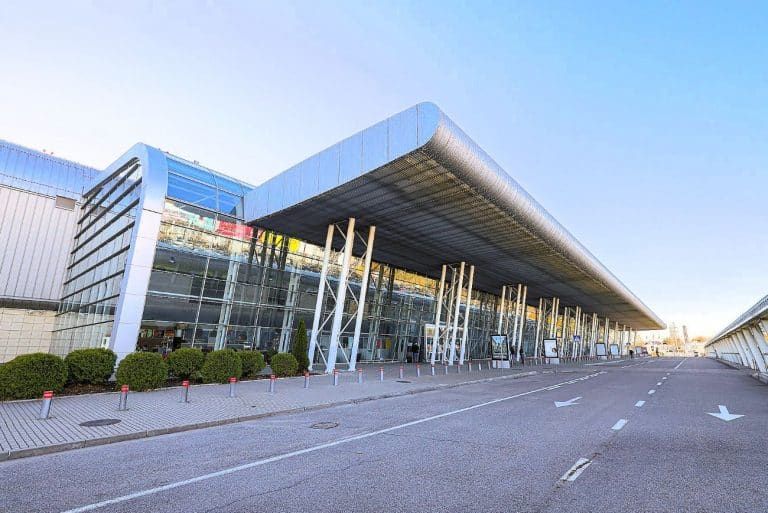
Airports of Thailand (AOT) increased the international passenger service charge from 730 baht to 1,120 baht effective June 20 for international flights. This represents a 53.4% increase.
The measure applies at the country’s six major airports : Bangkok Don Mueang and Suvarnabhumi, Chiang Mai, Chiang Rai, Hat Yai and Phuket. AOT justifies it by INTENDING to finance infrastructure upgrades.
TAT said the higher fees would support long-term airport development. Most airports are indeed suffering for decades of congestion with 20-year old facilities which have barely been renovated…
The Ministry of Tourism also continues to look at introducing a new 300-baht tourist levy. It is in principal approved and just need to confirm now its introduction. Bangkok would also like to make travel insurance compulsory for foreign visitors before entering the Kingdom. Both measures would definitely make Thailand not competitive compared to its neighbors.
Ultra-nationalism detrimental to the traditional Thai welcome towards tourists?
Thailand also tightened entry conditions in a crusade against abuses of visitors of certain countries but also as a wave of xenophobia sweeps the country with a sharp rise in ultra-nationalism feelings. It was actually pointed in an article by respected senior staff writer Pravit Rojanaphruk in Thai newspaper Khaosod.
Authorities have rushed to scrap the previous 60-day visa-free regime for 93 nations. The official date is still to be revealed but some of the announced measures such as reintroducing a visa for India have already devastating effects. In Phuket, the travel industry complaints about that the reintroduction of the THB2,000 e-visa (roughly USD60) is meanwhile killing the very lucrative wedding market.
The Government also introduced stricter screening procedures at borders. The changes are aimed at combating visa abuse and transnational crime.
Immigration authorities recently disclosed that nearly 29,500 foreigners had been denied entry, while more than 169,000 individuals have been blacklisted under enhanced digital screening systems. The crackdown forms part of the country’s new “No Entry, No Stay, No Escape” policy.
However, the tighter borders are also making collateral victims : tourists coming from “undesirable” countries. The most blatant case is the refusal of Cambodian visitors coming for holidays but also of travelers who own a business in the country. As well as monitoring and interrogating travelers who seem to commute to much between both countries in the eyes of immigration authorities. Tourists arriving from Cambodia are advised for their own peace of mind to avoid entry or transit in Thailand.
With rising costs, tighter border controls and geopolitical uncertainty weighing on consumer confidence, Thailand image of a dreamed paradise destination is fading away. Thai travel professionals are certainly facing their most challenging environment since COVID. But this time, the damage comes from inside.