
Toronto Airport layout poses risk of aircraft collisions
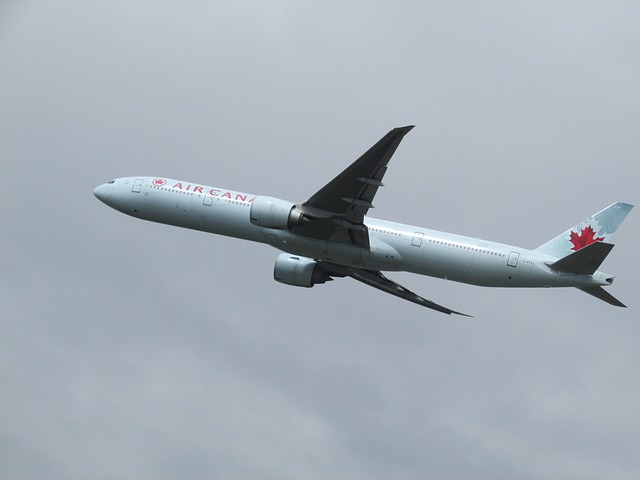
The confusing runway layout of Canada’s busiest airport is causing risks of aircraft collisions, according to a federal safety report.
The Transportation Safety Board of Canada found a number of issues after investigations into 27 runway incursions at Toronto’s Pearson International Airport.
It says the runway holding positions on taxiways connected to runways are distracting to pilots.
"The incursions examined in this report involved flight crews who had been instructed to hold short, and who understood they were approaching an active runway," said Kathy Fox, chairwoman of the Transportation Safety Board of Canada.
"However, despite those factors, these flight crews did not recognize the visual cues that identified the runway holding position."
The findings came from close call runway incursions between June 2012 and November 2017.
None of the incidents resulted in a collision.
Air traffic controllers managed to get pilots to stop on time in most cases but on three occasions a taxing plane ended up on a live runway.
The main cause of concern centered on the unique layout of taxiways linking two of the airport’s five runways.
"These uncommon features mean that the hold-short lines are not where crews are expecting to see them. Combined with crews who aren’t familiar with the exits, and relatively fast regional jet taxi speeds, this reduces the chance that crews recognize the lines in time," said Ewan Tasker, TSB air investigations manager.
The airport authority said it had already begun taking preventative measures.
"In addition to specific enhancements to our runways and taxiways, new lighting systems and mandatory LED backlit signage, we have also provided up-to-date safety information and educational outreach to these carriers about our operations," it said.
The report, which cited the highly unusual runway-taxiway layout for a major airport, recommends solutions such as building a separate taxiway between the two runways.
The report also wants to see a change of standard operating procedures for arriving pilots to complete post-landing checks only after leaving all active runways.
Capt. Matt Hogan of the Air Canada Pilots Association welcomed the findings.
"We are fortunate that none of the incidents cited by the board resulted in injury or fatality. What we need now is action," he said


TravelMole Editorial Team
Editor for TravelMole North America and Asia pacific regions. Ray is a highly experienced (15+ years) skilled journalist and editor predominantly in travel, hospitality and lifestyle working with a huge number of major market-leading brands. He has also cover in-depth news, interviews and features in general business, finance, tech and geopolitical issues for a select few major news outlets and publishers.





















Vegas’s Billion-Dollar Secrets – What They Don’t Want Tourists to Know

Visit Florida’s New CEO Bryan Griffin Shares His Vision for State Tourism with Graham

Chicago’s Tourism Renaissance: Graham Interviews Kristin Reynolds of Choose Chicago

Graham Talks with Cassandra McCauley of MMGY NextFactor About the Latest Industry Research

Destination International’s Andreas Weissenborn: Research, Advocacy, and Destination Impact

Graham and Don Welsh Discuss the Success of Destinations International’s Annual Conference

Graham and CEO Andre Kiwitz on Ventura Travel’s UK Move and Recruitment for the Role

Brett Laiken and Graham Discuss Florida’s Tourism Momentum and Global Appeal

Graham and Elliot Ferguson on Positioning DC as a Cultural and Inclusive Global Destination

Graham Talks to Fraser Last About His England-to-Ireland Trek for Mental Health Awareness

Kathy Nelson Tells Graham About the Honour of Hosting the World Cup and Kansas City’s Future

Graham McKenzie on Sir Richie Richardson’s Dual Passion for Golf and His Homeland, Antigua







 ADS PRO
Higher departure tax and visa cost, e-arrival card: Japan unleashes the fiscal weapon against tourists
Singapore to forbid entry to undesirable travelers with new no-boarding directive
Euromonitor International unveils world’s top 100 city destinations for 2025
U.S.A. and Israel attacks on Iran impact air movements in the Gulf (Update 1.00pm CET)
Global tourism exceeds 1.5 billion travelers announces UN-Tourism