
UNWTO Low Carbon Economy Study Unveiled
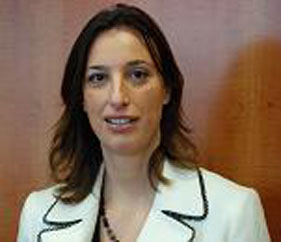
Thea Chiesa at the World Business Summit
Global business leaders came together at the World Business Summit on Climate Change in Copenhagen (May 24-26).
At the event, the report ‘Towards a Low Carbon Travel and Tourism Sector’ was presented by the World Economic Forum. This study represents the fruit of a collaboration between UNWTO and several key organisations.
It is an element of the Davos Declaration Process initiated in 2003 with the UN Environmental Programme (UNEP) and the World Meteorological Organization (WMO).
The study puts forward proposals for the mitigation of greenhouse gas emission in various sectors such as transport and accommodation.
It also considers market mechanisms and innovative methods of financing the transformation towards a green economy and encourages new public-private-partnerships.
“The study deals with perhaps the most fundamental planetary issue of our time – how to shift progressively towards a sustainable low carbon lifestyle”, said UNWTO Assistant Secretary General, Geoffrey Lipman, “It is a means to draw attention to the potential key role of the industry with regards to climate change and reducing carbon emissions. It confirms that our sector generates 5% of CO2 and that we can and will progressively reduce our impacts in line with evolving global agreements”
“The study was developed over a one-year period as a multi-stakeholder process involving international organizations, governments, and industry associations to jointly conduct an analysis of the impact of the travel and tourism sector on CO2 emissions and develop a framework for emission reduction by the sector as a whole” states Thea Chiesa, Head Aviation, Travel & Tourism Industries at the World Economic Forum.
‘Towards a Low Carbon Travel and Tourism Sector’ also supports global approaches regarding emission trading for aviation and calls for proceeds to be used to set up a “Green Fund for Travel and Tourism” to help finance the trillion dollar mitigation projects identified within the industry.
The study points out how governments, industry stakeholders and consumers can collectively improve the low carbon sustainability of travel, which will in turn enable the continued growth of the sector and the sustainable economic development of nations. It emphasizes the importance of tourism as a development driver for poorer nations and calls for the continued growth of sustainable air transport in these countries.
Finally it underscores the need to continue to address climate change and poverty alongside the economic crisis.
Valere Tjolle


Valere





















Vegas’s Billion-Dollar Secrets – What They Don’t Want Tourists to Know

Visit Florida’s New CEO Bryan Griffin Shares His Vision for State Tourism with Graham

Chicago’s Tourism Renaissance: Graham Interviews Kristin Reynolds of Choose Chicago

Graham Talks with Cassandra McCauley of MMGY NextFactor About the Latest Industry Research

Destination International’s Andreas Weissenborn: Research, Advocacy, and Destination Impact

Graham and Don Welsh Discuss the Success of Destinations International’s Annual Conference

Graham and CEO Andre Kiwitz on Ventura Travel’s UK Move and Recruitment for the Role

Brett Laiken and Graham Discuss Florida’s Tourism Momentum and Global Appeal

Graham and Elliot Ferguson on Positioning DC as a Cultural and Inclusive Global Destination

Graham Talks to Fraser Last About His England-to-Ireland Trek for Mental Health Awareness

Kathy Nelson Tells Graham About the Honour of Hosting the World Cup and Kansas City’s Future

Graham McKenzie on Sir Richie Richardson’s Dual Passion for Golf and His Homeland, Antigua







 ADS PRO
Higher departure tax and visa cost, e-arrival card: Japan unleashes the fiscal weapon against tourists
Singapore to forbid entry to undesirable travelers with new no-boarding directive
Euromonitor International unveils world’s top 100 city destinations for 2025
U.S.A. and Israel attacks on Iran impact air movements in the Gulf (Update 1.00pm CET)
Global tourism exceeds 1.5 billion travelers announces UN-Tourism