
Vulnerable Nations Highlighted in Climate Change Index 166 Countries Ranked
Sunday, 06 Sep, 2009
0
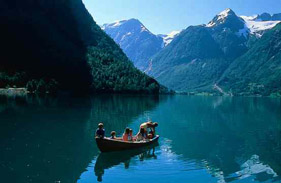
Norway, Finland, Japan, Canada and New Zealand safest, whilst Somalia, Haiti, Afghanistan and Sierra Leone are vulnerability hotspots
Norway, Finland, Japan, Canada and New Zealand are the countries best placed to weather the effects of climate change, while Africa hosts 22 of 28 “extreme risk” countries, according to the Climate Change Vulnerability Index (CCVI), released today by global risks consultancy, Maplecroft.
The CCVI is part of Maplecroft’s new Climate Change Risk Report 2009/10. It rates 166 countries on their capacity to mitigate risks to society and the business environment posed by changing patterns in natural hazards, such as droughts, flooding, storms and sea level rises and the resulting effects on ecosystems.
Unlike other studies, the index does not attempt to predict changes to patterns of natural hazards or ecosystems as a result of climate change, but instead measures how vulnerable a country is now and how well prepared it is to combat the impacts of climate change.
Norway, (166), is the lowest ranked country in the CCVI and best equipped to address the challenges of climate change. Among the factors contributing to its ranking are its low population density, excellent health-care and communications systems, good governance and a strong institutional framework. Additionally, Norway’s overall food, water and energy security are high and its ecosystems are well protected. The countries least at risk after Norway are Finland (165), Japan (164), Canada (163) and New Zealand (162). Other low risk countries include UK (155), USA (152) and Germany (151).
Japan’s ranking relates to its institutional stability, strong economy and high net primary productivity. However, 10% of Japan’s population live in Tokyo (5,847 people per km2 in 2007) and as Japan’s population increases, so too will the stress on surrounding natural resources and the land, making it vitally important that Japan addresses its climate change vulnerabilities.
Poorer nations, particularly those located in Sub-Saharan and West Africa, with few natural resources and limited infrastructures are rated as particularly vulnerable by the CCVI. Somalia (1), Haiti (2), Afghanistan (3), Sierra Leone (4) and Burundi (5) are rated most at risk, while other extreme risk countries include Nepal (11), Bangladesh (12), Sri Lanka (25) and Cambodia (27).
Somalia’s ability to adapt to climate change is severely undermined by food insecurity, conflict and political violence and human rights risk, whereas in Haiti, declining water quality and the rising risk of food and energy insecurity all contribute to its very poor rating.
India (56) is the only emerging economy to be rated as high risk. This is due to high population density, increased security risk, poor resource security and concerns about human rights violations. India’s vulnerability is of particular concern to business because of its huge role in global supply chains. Other countries of concern include Pakistan (29), Philippines (44) and Indonesia (61), which all rated high risk, whilst Brazil (103) and China (110) are categorized as medium risk, with Russia (127) rated as low risk.
Maplecroft has designed the index to enable governments, international organisations and the private sector to identify increased financial and societal risks arising from vulnerability to climate change. To enable this, the CCVI is accompanied by an interactive GIS (Geographical Information System) map, which pinpoints climate change vulnerability at sub-national and site specific levels by breaking down each country into 25km” cells. Users can locate not only countries of high risk but regions, towns and industrial sites, allowing governments and business to develop mitigation strategies against the potential impacts of climate change.
“The interrelated nature of global risks mean that ineffective adaptation to climate change will make the world more vulnerable to other risks such as energy, food and water security, infectious diseases like malaria, displacement, political instability and even conflict,” said Professor Alyson Warhurst, of Warwick Business School and founding director of Maplecroft. “In combination, these risks reinforce one another and threaten to undermine global development and economic growth. Governments and non-governmental organisations increasingly view business as a key player in preventing the impacts of climate change. Business needs to reduce the impacts of climate change throughout global value chains and by doing so make a positive contribute to the defining challenge of the 21st century.”
Maplecroft used 39 separate data sources in the production of the CCVI including: UN Development Programme, UN Environmental Programme, UNAIDS, UN Framework Convention on Climate Change, United States geological Survey, World Health Organisation, World Resources Institute, International Monetary Fund, the European Commission and risk indices from Maplecroft’s Global Risks Portfolio.
Maplecroft’s new Climate change Risks Report 2009/10, which includes the CCVI, provides detailed analysis and risk indices for four key areas of climate change risk: climate change vulnerability; CO2 emissions from energy use and land use change; unsustainable energy and climate change regulation. The report provides quantifiable risk data in country scorecards, sub-national GIS maps for all risk indices and has been created to help businesses, investors and international organisations assess and compare climate change risks across countries.
Further info: www.maplecroft.com/
Valere Tjolle


Valere




















Vegas’s Billion-Dollar Secrets – What They Don’t Want Tourists to Know

Visit Florida’s New CEO Bryan Griffin Shares His Vision for State Tourism with Graham

Chicago’s Tourism Renaissance: Graham Interviews Kristin Reynolds of Choose Chicago

Graham Talks with Cassandra McCauley of MMGY NextFactor About the Latest Industry Research

Destination International’s Andreas Weissenborn: Research, Advocacy, and Destination Impact

Graham and Don Welsh Discuss the Success of Destinations International’s Annual Conference

Graham and CEO Andre Kiwitz on Ventura Travel’s UK Move and Recruitment for the Role

Brett Laiken and Graham Discuss Florida’s Tourism Momentum and Global Appeal

Graham and Elliot Ferguson on Positioning DC as a Cultural and Inclusive Global Destination

Graham Talks to Fraser Last About His England-to-Ireland Trek for Mental Health Awareness

Kathy Nelson Tells Graham About the Honour of Hosting the World Cup and Kansas City’s Future

Graham McKenzie on Sir Richie Richardson’s Dual Passion for Golf and His Homeland, Antigua







 ADS PRO
Clearing CSS/JS assets' cache... Please wait until this notice disappears...
Updating... Please wait...
Higher departure tax and visa cost, e-arrival card: Japan unleashes the fiscal weapon against tourists
Singapore to forbid entry to undesirable travelers with new no-boarding directive
Euromonitor International unveils world’s top 100 city destinations for 2025
U.S.A. and Israel attacks on Iran impact air movements in the Gulf (Update 1.00pm CET)
Global tourism exceeds 1.5 billion travelers announces UN-Tourism