
Workplace massages introduced at Teletext Holidays
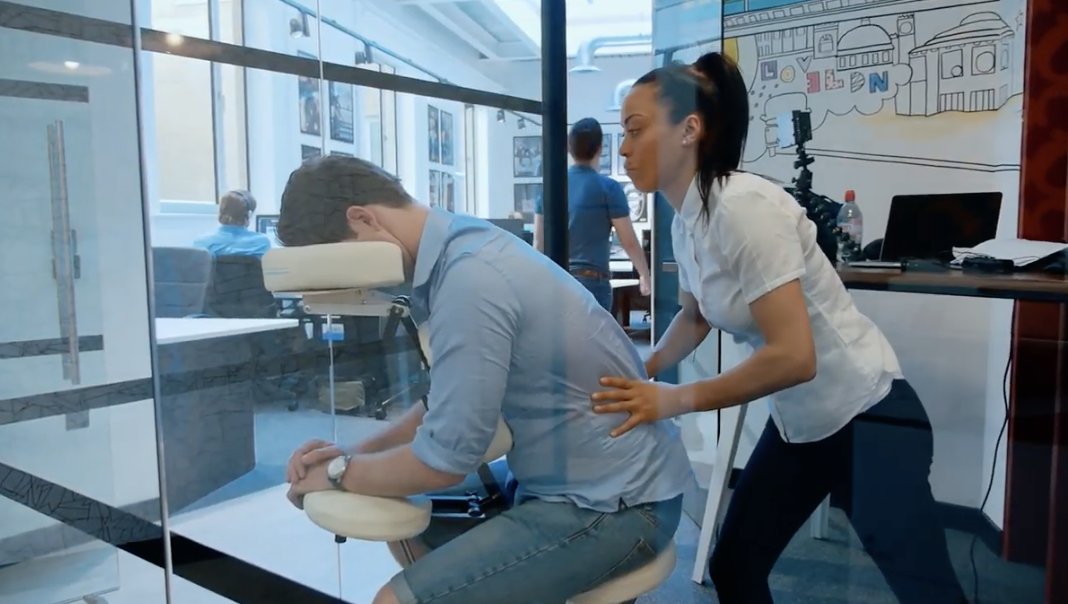
Teletext Holidays has introduced a weekly wellbeing service in readiness for Massage at Work Week which takes place next week.
It has collaborated with WorkSpa, a corporate wellbeing company, which visits the office once a week to provide relaxing and re-energising massages to employees.
The weekly 20-minute sessions are designed to alleviate stress and improve productivity in the workplace.
Wayne Perks, managing director of Teletext Holidays, said: "The stress relief initiative in association with WorkSpa has been hugely successful and the massages are eagerly anticipated each week – as you can imagine!
"We understand the importance of looking after our employees which is why we continuously seek opportunities to enable our staff members to relax, supporting both their body and mind."


Bev
Editor in chief Bev Fearis has been a travel journalist for 25 years. She started her career at Travel Weekly, where she became deputy news editor, before joining Business Traveller as deputy editor and launching the magazine’s website. She has also written travel features, news and expert comment for the Guardian, Observer, Times, Telegraph, Boundless and other consumer titles and was named one of the top 50 UK travel journalists by the Press Gazette.




















Vegas’s Billion-Dollar Secrets – What They Don’t Want Tourists to Know

Visit Florida’s New CEO Bryan Griffin Shares His Vision for State Tourism with Graham

Chicago’s Tourism Renaissance: Graham Interviews Kristin Reynolds of Choose Chicago

Graham Talks with Cassandra McCauley of MMGY NextFactor About the Latest Industry Research

Destination International’s Andreas Weissenborn: Research, Advocacy, and Destination Impact

Graham and Don Welsh Discuss the Success of Destinations International’s Annual Conference

Graham and CEO Andre Kiwitz on Ventura Travel’s UK Move and Recruitment for the Role

Brett Laiken and Graham Discuss Florida’s Tourism Momentum and Global Appeal

Graham and Elliot Ferguson on Positioning DC as a Cultural and Inclusive Global Destination

Graham Talks to Fraser Last About His England-to-Ireland Trek for Mental Health Awareness

Kathy Nelson Tells Graham About the Honour of Hosting the World Cup and Kansas City’s Future

Graham McKenzie on Sir Richie Richardson’s Dual Passion for Golf and His Homeland, Antigua







 ADS PRO
Global tourism exceeds 1.5 billion travelers announces UN-Tourism
Qatar Airways offers reduced timetable to over 60 destinations
WTTC global tourism reached record economic impact of 11 trillion in 2025
Hands In, UATP join forces for airline multi-card payments
Overseas travelers to the United States declined by 2.5% in 2025