
Airlines accused of cashing in on ‘rip-off’ no-show clauses
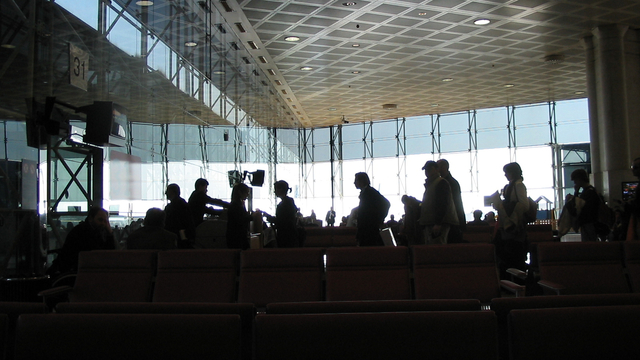
A consumer rights group is calling on the CAA to get tough with airlines who, it claims, are cashing in on ‘rip-off’ no-show clauses.
Which? wants the UK aviation body to ban the clauses, claiming they penalise passengers who miss one leg of a flight.
The consumer champion says it knows of cases where passengers have been left stranded and hundreds of pounds out of pocket by airlines who ‘exploit’ the little-known clauses ‘that are often buried deep in the terms and conditions’.
It claims that in some cases airlines are effectively able to double their money by reselling the seats they cancel, with no refund given to passengers.
Last December, it wrote to nine airlines, including British Airways and Virgin Atlantic, informing them that the practice potentially breaches both the Consumer Rights Act and the Unfair Terms in Consumer Contracts Directive.
It argues their no-show clauses create a ‘significant imbalance’ between the airline, which stands to profit from the term, and passengers who face having to pay out considerable sums of money to rebook.
In response, Flybe was the only carrier that pledged to make some changes, but it has not removed its ‘no-show’ clause completely.
Which? said it had previously secured commitments from Thomas Cook Airlines and Aurigny to scrap the terms, which have recently been ruled unlawful in Austria,.
In a report last week, the CAA concluded that a policy of automatically cancelling a passenger’s return if they do not take the outbound flight is ‘disproportionate’.
It also said that ‘no-show’ clauses used by some airlines – including BA – fell short of its expectations on ‘fairness and transparency’ for consumers.
But the CAA stopped short of taking any enforcement action.
Caroline Normand, Which? director of advocacy, said: "It’s totally unreasonable for an airline to cancel a passenger’s return flight – often without warning – simply because they’ve missed the first leg of their journey.
"Airlines have been able to cash in with this tactic for too long – leaving people miserable, stranded and hundreds if not thousands of pounds out of pocket.
"If airlines are not going to do the right thing and stop this disgraceful practice on their own, the Civil Aviation Authority should step in and ban these rip-off clauses."
In its defence, BA said many of its tickets allow customers to make changes to their flights if they inform the airline before they travel, and stated that the policy is common practice in the industry, designed to stop ‘tariff abuse’.
Virgin Atlantic told Which?: "Having worked with the CAA and listened to our customers we have now updated our policy on no-shows. We always encourage customers to get in touch as soon as they think they are going to miss their flight. If they arrive too late at the airport we will rebook them on the next available flight and their inbound flight won’t be cancelled.
"If a customer can’t make their flight due to a legitimate change in circumstances we will not cancel their inbound flight if they get in touch with us before the flight. If the customer can’t contact us before they miss their flight they will need to contact us as soon as they can and if there has been a legitimate change in circumstances we will reinstate their inbound ticket.
"We would also like to emphasise that if customers are unable to take their outbound flight due to an event beyond their control, we will honour any onward or return journeys if we are provided with proof of such an event."


Bev
Editor in chief Bev Fearis has been a travel journalist for 25 years. She started her career at Travel Weekly, where she became deputy news editor, before joining Business Traveller as deputy editor and launching the magazine’s website. She has also written travel features, news and expert comment for the Guardian, Observer, Times, Telegraph, Boundless and other consumer titles and was named one of the top 50 UK travel journalists by the Press Gazette.



















Vegas’s Billion-Dollar Secrets – What They Don’t Want Tourists to Know

Visit Florida’s New CEO Bryan Griffin Shares His Vision for State Tourism with Graham

Chicago’s Tourism Renaissance: Graham Interviews Kristin Reynolds of Choose Chicago

Graham Talks with Cassandra McCauley of MMGY NextFactor About the Latest Industry Research

Destination International’s Andreas Weissenborn: Research, Advocacy, and Destination Impact

Graham and Don Welsh Discuss the Success of Destinations International’s Annual Conference

Graham and CEO Andre Kiwitz on Ventura Travel’s UK Move and Recruitment for the Role

Brett Laiken and Graham Discuss Florida’s Tourism Momentum and Global Appeal

Graham and Elliot Ferguson on Positioning DC as a Cultural and Inclusive Global Destination

Graham Talks to Fraser Last About His England-to-Ireland Trek for Mental Health Awareness

Kathy Nelson Tells Graham About the Honour of Hosting the World Cup and Kansas City’s Future

Graham McKenzie on Sir Richie Richardson’s Dual Passion for Golf and His Homeland, Antigua







 ADS PRO
Higher departure tax and visa cost, e-arrival card: Japan unleashes the fiscal weapon against tourists
Euromonitor International unveils world’s top 100 city destinations for 2025
U.S.A. and Israel attacks on Iran impact air movements in the Gulf (Update 1.00pm CET)
Global tourism exceeds 1.5 billion travelers announces UN-Tourism
WTTC global tourism reached record economic impact of 11 trillion in 2025