
Brittany Ferries: Brexit and Covid cost us ‘several hundred million euros’ already
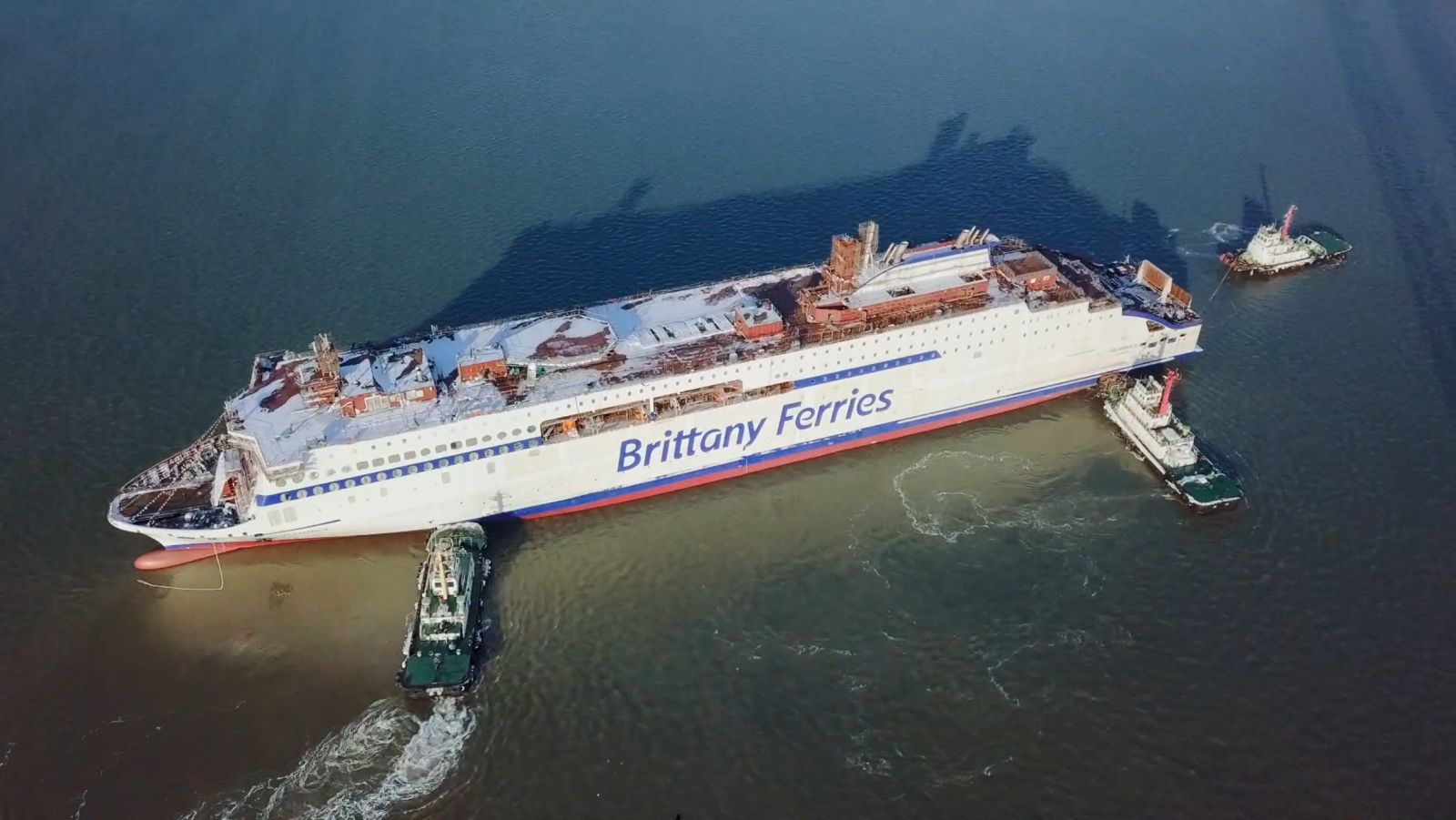
The combined effects of Brexit and the Covid-19 pandemic have cost Brittany Ferries ‘several hundred million euros’ according to its president Jean-Marc Roué.
In a statement to mark the launch of Salamanca, the second of the company’s three new ferries to join its fleet, Roué said despite "these crises" he was committed to improving its fleet, reducing the company’s carbon footprint and developing the regions it serves.
"In spite of Brexit and Covid which have cost our company several hundred million euros already, I am resolved to remain on our path towards eco-responsibility and energy transition."
"It is a formal commitment I’ve made: we will continue, despite these crises, to reduce our carbon footprint, to keep on improving our fleet and to contribute to the development of the regions we serve. Salamanca is a good illustration of this. By renewing our fleet today, we are ensuring a return to growth tomorrow and Brittany Ferries and our partners remain confident in the future."
Salamanca will join sister-ship Galicia when she enters service in the spring of 2022 and will be powered by a cleaner Liquefied Natural Gas (LNG). The launch ceremony took place on 6 January 2021 at the CMJL shipyard in Weihai, China, where she is under construction.
Fleet renewal was one of the pillars of Brittany Ferries’ five-year recovery plan with the investment in new ships made before the pandemic began.
NCL said a trio of ‘cleaner, more efficient and comfortable vessels will help secure the company’s future ensuring the continuity of passenger and freight services’.
Galicia entered service in December 2020. Salamanca will join her in 2022 with Santoña following in 2023. Both Salamanca and Santoña will be powered by LNG and will serve the company’s long-distance routes connecting the UK with Spain.
Each E-Flexer vessel promises a significant reduction in air quality and greenhouse gas emissions. They are also smoother, quieter and benefit from less vibration with better sea handling, to the benefit of passengers.
Like her sister Galicia, Salamanca will weigh-in at over 42,000 gross tonnes, meaning she will be one of the largest ships ever to serve the company, and at 215 metres long she will be joint-longest. She will carry 1,015 passengers, with over 2.7km of lane-space to house passenger and freight vehicles.
By Louise Longman, Contributing Editor (UK)




















Vegas’s Billion-Dollar Secrets – What They Don’t Want Tourists to Know

Visit Florida’s New CEO Bryan Griffin Shares His Vision for State Tourism with Graham

Chicago’s Tourism Renaissance: Graham Interviews Kristin Reynolds of Choose Chicago

Graham Talks with Cassandra McCauley of MMGY NextFactor About the Latest Industry Research

Destination International’s Andreas Weissenborn: Research, Advocacy, and Destination Impact

Graham and Don Welsh Discuss the Success of Destinations International’s Annual Conference

Graham and CEO Andre Kiwitz on Ventura Travel’s UK Move and Recruitment for the Role

Brett Laiken and Graham Discuss Florida’s Tourism Momentum and Global Appeal

Graham and Elliot Ferguson on Positioning DC as a Cultural and Inclusive Global Destination

Graham Talks to Fraser Last About His England-to-Ireland Trek for Mental Health Awareness

Kathy Nelson Tells Graham About the Honour of Hosting the World Cup and Kansas City’s Future

Graham McKenzie on Sir Richie Richardson’s Dual Passion for Golf and His Homeland, Antigua







 ADS PRO
Global tourism exceeds 1.5 billion travelers announces UN-Tourism
Qatar Airways offers reduced timetable to over 60 destinations
WTTC global tourism reached record economic impact of 11 trillion in 2025
Hands In, UATP join forces for airline multi-card payments
Suspension of all regional trains in Catalonia following two new rail accidents in Spain