Riskline is an intelligence provider focused exclusively on travel. Founded by road warriors who are passionate about safety, Riskline’s leadership has over 45 years of combined expertise in the travel risk and security sector.
The company recently unveiled its risk map for female travelers. Woman solo travel has surged by more than 60% over the past three years and now represents 71% of all solo trips worldwide.
At the same time, safety concerns are rising. The share of women reporting travel-related anxiety climbed from 64% to 70% in just one year. This contrast highlights a clear trend: while more women are embracing independent travel than ever before, demand for safer, more tailored, women-focused experiences is growing.
Globally, women continue to face significant legal and social constraints. According to the World Bank’s Women, Business and the Law report, women have access to only about 77% of the legal rights available to men. These limitations, combined with harassment and gender-based violence, continue to shape travel experiences worldwide.
Female travelers face specific safety risks, including sexual harassment and assault, harassment on public transportation and in public spaces, verbal and physical intimidation, gender-based discrimination, and a heightened sense of vulnerability.
Riskline’s Female Traveler Safety Map
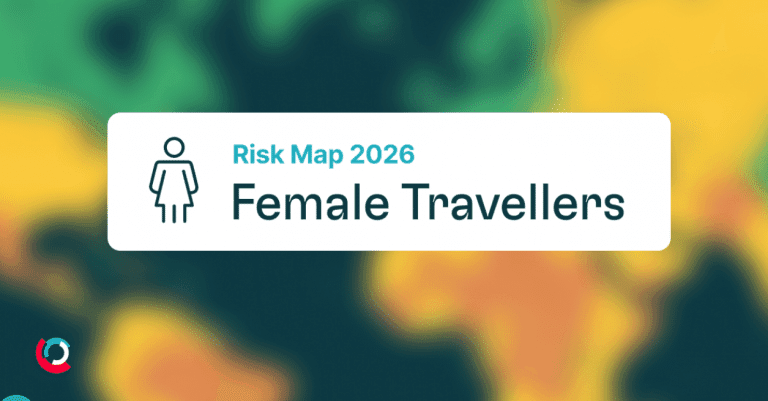
Riskline has developed the 2026 Female Traveler Risk Map to help women navigate these challenges. The map identifies 29 countries classified as “high concern,” where extra precautions are strongly advised. According to Riskline, these countries include:
-
Americas: Brazil, Mexico, Haiti, Honduras
-
Asia-Pacific: Afghanistan, Myanmar, Papua New Guinea, Pakistan, East Timor
-
Sub-Saharan Africa: Burundi, Central African Republic, Congo-Brazzaville, Democratic Republic of Congo, Guinea, Guinea-Bissau, Liberia, Nigeria, Sierra Leone
-
Middle East and North Africa: Chad, Iraq, Mali, Niger, Syria, Somalia, South Sudan, Sudan, Libya, Yemen, West Bank and Gaza
In contrast, safer destinations for female travelers include much of Europe, as well as Canada, Japan, New Zealand, Singapore, China, South Korea, and Australia.
Key highlights
Europe remains one of the safest regions for women traveling alone. In Asia-Pacific, destinations such as Singapore, Japan, New Zealand, China, South Korea, and Australia are considered safe, while others—like Afghanistan, Pakistan, Myanmar, and Papua New Guinea—present higher risks.
Across the Americas, safety can vary widely within the same country. In Brazil and Mexico, for example, conditions differ by region. In Brazil, states such as Bahia and Pernambuco report higher-than-average risks, while Santa Catarina was ranked the safest state in 2025.
The highest risk levels globally are concentrated in parts of Sub-Saharan Africa and the Middle East and North Africa. Ongoing geopolitical tensions, including the conflict involving Iran and the US–Israel alliance as of March 2026, are rapidly shifting security conditions.
Many governments are advising against non-essential travel due to increased risks. Disruptions to air travel, rerouting requirements, visa complications, and potential delays further complicate travel—especially for women navigating already challenging environments marked by instability and infrastructure gaps.
Methodology
The Female Traveler Safety Map is based on Riskline’s internal data across three key pillars:
-
Laws and Customs: Local dress codes, behavior expectations, and social norms
-
Safety: Levels of harassment, sexual assault, and overall personal security
-
Health and Wellness: Access to gynecological care, reproductive health services, hygiene products, and general healthcare
Challenges and support for female business travelers
Corporate travel policies often overlook gender-specific safety needs. According to a 2025 GBTA survey, although women make up 74% of travel buyers, only 27% say their company policies specifically address female traveler safety.
Additional findings show that 62% of travel buyers believe women face greater risks than men. While 55% feel women’s perspectives are adequately represented in shaping travel programs, 23% disagree and another 23% remain unsure.
Organizations can better support women through proactive planning and clear policies. Recommended measures include scheduling early flights and avoiding late-night solo travel, selecting accommodations in safe, well-located areas with vetted transportation, ensuring reliable communication and access to assistance, and providing guidance on local customs, health standards, and safety precautions.
Riskline tools for safer travel
Riskline offers several tools to help both travelers and organizations manage risk. These include Travel Search, which features a Female Safety Index evaluating laws, customs, safety, and healthcare; TripReady, which provides a quick overview of key concerns; and detailed Female Traveler Safety Reports that support duty-of-care obligations with country-specific insights.
As female travel continues to grow, understanding the evolving safety landscape is essential. Tools like Riskline’s Female Traveler Safety Map provide practical, actionable insights to help women plan safer, more confident journeys worldwide.