
Singapore Mandai Wildlife Resort is turning into a full-fledged multi-days destination
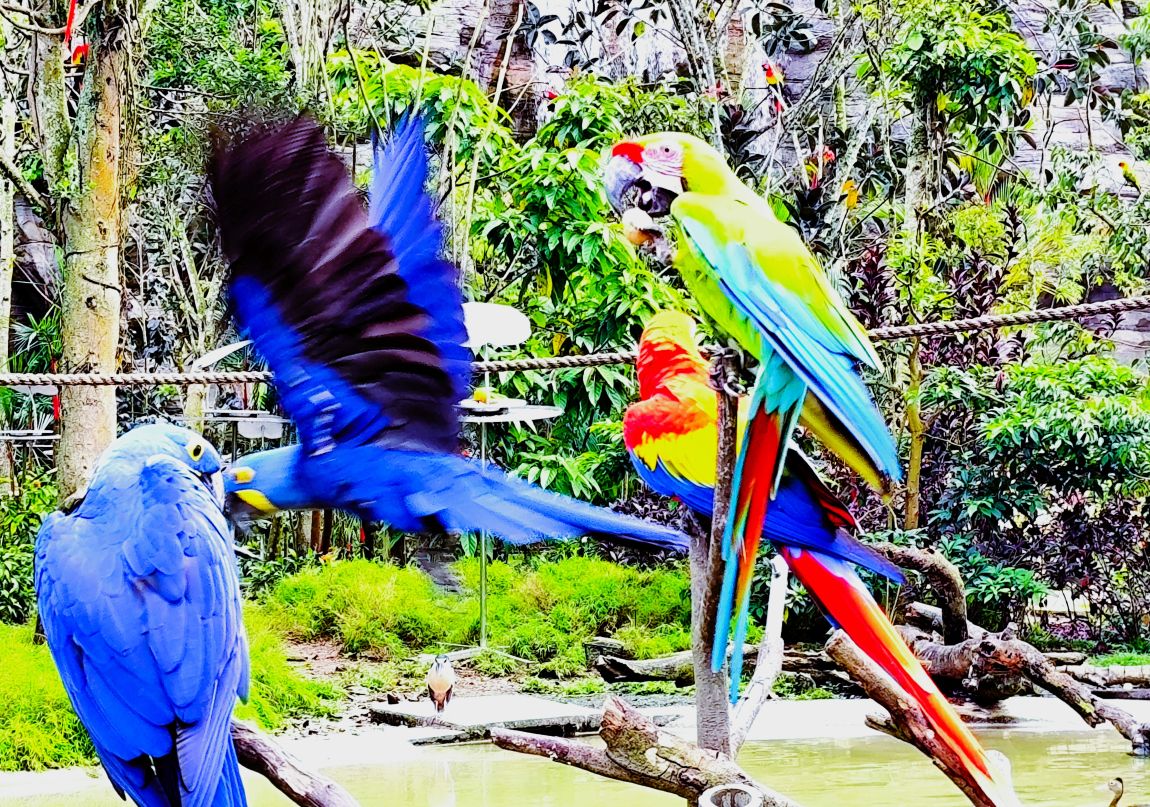
Singapore’s Mandai precinct entered in 2025 a new phase of its development reflecting the city-state’s long-term bet on developing nature-led tourism products.
Already home to the Singapore Zoo, Night Safari, River Wonders and Bird Paradise, Mandai is now evolving into a fully integrated wildlife and nature destination that blends conservation, public green space and tourism infrastructure on an unprecedented scale. The latest development was the opening at the end of November of Mandai Rainforest Resort by Banyan Tree.
The transformation of the Mandai reservoir area into Singapore‘s spectacular nature-dedicated district was launched over the past decade. It will further be nurtured and expanded until the late 2020s, represents one of Singapore’s most ambitious tourism investments.
Initial phases of the Mandai redevelopment were estimated at around S$1 billion, or roughly US$750 million, covering major groundwork such as the relocation of Jurong Bird Park to Mandai, new visitor infrastructure and public nature areas. While no official cumulative figure has been released for all future phases, total investment across the multi-year, multi-project precinct is widely expected to rise well beyond that initial amount as new attractions, accommodation and conservation projects come online.
A unique identity and concept
What distinguishes Mandai’s approach is its emphasis on landscape-scale planning rather than isolated attractions. It turns all the attractions located in the district into an area within Singapore without any equivalent nationwide. And probably in other ASEAN countries.
Future expansion focuses on immersive habitats, ecological connectivity and longer visitor stays, aligning tourism growth with environmental protection. The aim is not simply to increase footfall, but to redefine how an urban society interacts with nature.
At the core of this shift is Rainforest Wild, a new generation wildlife experience designed to blur the line between park and forest. Rainforest Wild Asia opened in early 2025, offering multi-level trails, elevated walkways and self-guided exploration through Southeast Asian ecosystems. Soon, Rainforest Wild Africa, will extend the concept further, reinforcing Mandai’s role as a testing ground for experiential wildlife tourism.
Rewilding the Visitor Experience
Mandai’s future parks are designed to feel open and exploratory rather than enclosed. Fixed routes give way to forest paths, and habitats are shaped to reflect natural ecosystems. This supports animal welfare while responding to changing traveler expectations for more authentic, low-impact experiences. At the same time, a growing network of free public boardwalks and reservoir-side trails allows residents to access the area without entering ticketed attractions, strengthening Mandai’s function as a green corridor in northern Singapore.
Building a Multi-Day Nature Destination
Tourism infrastructure is expanding alongside nature areas to encourage longer stays. The Mandai Rainforest Resort, operated by Banyan Tree, anchors this strategy. Integrated into the forest canopy, the resort positions Mandai as an overnight destination rather than a day trip. Indoor nature attractions, learning centers and flexible event spaces are also planned to diversify Mandai’s appeal across education, business and family travel.
With the opening on November 26, 2025, Banyan Group and Mandai Wildlife Group marked a major milestone in the development of Mandai Wildlife Reserve. Located in the heart of the Reserve, Mandai Rainforest Resort by Banyan Tree marked Banyan Group’s 100th resort and its symbolic homecoming to Singapore. Owned by Mandai Wildlife Group, the property is the first-ever resort situated within a world-leading wildlife and nature destination in a capital city. Beside restaurants, bars, a rooftop pool and a spa, the hotel offers 338 rooms and suites.

Looking further ahead, new mangrove and wetland nature parks near the Mandai–Kranji area are scheduled for development later this decade, strengthening biodiversity protection while offering low-impact recreation such as birdwatching and guided walks.
Mandai’s expansion reflects a broader shift in Singapore’s tourism strategy. Showing not only Singapore’s tourism creativity, it also prioritizes from now on sustainability, resilience and quality over scale. As climate pressures and urban density reshape global travel, Mandai is a perfect example of the future of tourism.
Related News Stories: Banyan Tree marks opening of 100th hotel Banyan Group celebrates 100th property with Singapore grand ... Interview: Ariella Kageruka, Head of Tourism Rwanda Development ...


newadmin




















Vegas’s Billion-Dollar Secrets – What They Don’t Want Tourists to Know

Visit Florida’s New CEO Bryan Griffin Shares His Vision for State Tourism with Graham

Chicago’s Tourism Renaissance: Graham Interviews Kristin Reynolds of Choose Chicago

Graham Talks with Cassandra McCauley of MMGY NextFactor About the Latest Industry Research

Destination International’s Andreas Weissenborn: Research, Advocacy, and Destination Impact

Graham and Don Welsh Discuss the Success of Destinations International’s Annual Conference

Graham and CEO Andre Kiwitz on Ventura Travel’s UK Move and Recruitment for the Role

Brett Laiken and Graham Discuss Florida’s Tourism Momentum and Global Appeal

Graham and Elliot Ferguson on Positioning DC as a Cultural and Inclusive Global Destination

Graham Talks to Fraser Last About His England-to-Ireland Trek for Mental Health Awareness

Kathy Nelson Tells Graham About the Honour of Hosting the World Cup and Kansas City’s Future

Graham McKenzie on Sir Richie Richardson’s Dual Passion for Golf and His Homeland, Antigua







 ADS PRO
Phocuswright reveals the world's largest travel markets in volume in 2025
Higher departure tax and visa cost, e-arrival card: Japan unleashes the fiscal weapon against tourists
Singapore to forbid entry to undesirable travelers with new no-boarding directive
Euromonitor International unveils world’s top 100 city destinations for 2025
U.S.A. and Israel attacks on Iran impact air movements in the Gulf (Update 1.00pm CET)