
Time flies in the world of train travel 2
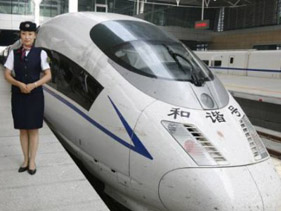
Worry not: the Chinese are on their way
I have to say that I’m really pleased that Cathy’s journey to the ABTA convention by European rail was such a pleasant experience – it certainly shows that hassle-free, guilt-free rail travel is possible. In continental Europe. See: www.travelmole.com/stories/1144826.php
And, in fact, with the emergence of border-free online reservations systems, many people will be able to experience joined up seat reservations and special deal tickets too, opening up the whole experience to a much bigger marketplace and making a difference to the environment into the bargain.
I have to say, however, that in my personal experience, the UK is missing out on this opportunity.
I travel to Scotland regularly (about once a month) from my home in the West of England. It’s a journey of about 400 miles – so an ideal opportunity to travel by train. For years I drove, then flew – basically to save time – one hour to the airport, one hour check in, an hour for the flight then an hour at the other end – four, maximum five hours and I was there. It makes sense if your trip is only for two or three days for business.
Security put a stop to the speed, adding an hour or two to the total time and, of course at that time awareness of airline emissions added a bit of guilt that wasn’t wholly assuaged by offsetting.
The train – notionally (ie what the companies’ timetable said) offered a six to seven hour journey with three or four changes. Marginally more uncomfortable than flying but more or less the same price and certainly less cost to the conscience.
I’ve now spent nearly a year travelling up and back to Scotland every month or so by train (ten times anyway) and I can honestly say that not one of these journeys has been wholly hassle-free or, indeed, comfortable.
Either the train reservations systems are down – in which case the trains are frequently overcrowded with fare-paying passengers standing or sitting in the aisles or corridors. Or the network (signals, lines) is in trouble with major or minor delays hammering away at the connection time.
On my last journey I experienced both. All the reservations systems were down going North and the return journey was dogged by delays of up to an hour on each connecting journey. The experience was pretty gruelling and the journey time extended by three hours of delays.
As it happens, all my European journeys, like Cathy’s have been superb and not very costly. And I’m sure that it may be possible to say the same for long-distance point-to point rail travel in the UK
But given that a rail system, by its nature, should excel at cross-country journeys, it’s rather a pity that it doesn’t – in the UK.
So why the difference?
The fact is that, whereas most continental European train systems are still largely government controlled, the UK government under Mrs Thatcher sold off the railway system to the highest bidders in 1993 effectively offering point-to-point transport monopolies.
Moreover, the rail network had suffered from a lack of investment for some years before the sell-off which added to the potential problems.
And when the new rail operators applied their toxic mix of maximum load factors and prices; minimum expenditure and investment to recoup the cost of their monopolies in double quick time – the only people who suffered were the poor old passengers. And the only beneficiaries were the transport operators (including airlines, of course, who offered the UK’s only premium level affordable transport option).
Given the market mantra, a few years should have seen this situation regularised – competition would have weeded out the sheep from the lambs and all would have been efficient again.
But markets don’t work when there are effective monopolies (even where they are regulated – obviously) and the system is clearly nearly as bad now as when deregulation took place.
It’s a pity, because once upon a time, the UK railways (then in private hands) were the envy of the world – now high prices, lack of integration, under investment and neglectful stewardship – all make the UK transport system a laughing stock.
UK train companies could have been leading partners in European transport integration but now the power and volition has been grasped by more deserving European and international companies, possibly driving their trains down the UK’s permanent way – already German train systems have tested their way through the channel tunnel and there are plans for Chinese trains to arrive at St Pancras.
It’s sad and a pity for UK-based travellers, but certain that in time the market will regularise the situation – so look forward to comfortable, efficient, reasonably-priced Deutsche Bahn journeys from Canterbury to Manchester, SNCF from Hastings to Huddersfield and China Rail from Beijing to Inverness!
Valere Tjolle
Get free sustainable tourism reports from Vision on Sustainable Tourism HERE
Valere Tjolle is editor of the Sustainable Tourism Report Suite: EXTRA SPECIAL OFFER at: www.travelmole.com/stories/1144671.php


Valere





















Vegas’s Billion-Dollar Secrets – What They Don’t Want Tourists to Know

Visit Florida’s New CEO Bryan Griffin Shares His Vision for State Tourism with Graham

Chicago’s Tourism Renaissance: Graham Interviews Kristin Reynolds of Choose Chicago

Graham Talks with Cassandra McCauley of MMGY NextFactor About the Latest Industry Research

Destination International’s Andreas Weissenborn: Research, Advocacy, and Destination Impact

Graham and Don Welsh Discuss the Success of Destinations International’s Annual Conference

Graham and CEO Andre Kiwitz on Ventura Travel’s UK Move and Recruitment for the Role

Brett Laiken and Graham Discuss Florida’s Tourism Momentum and Global Appeal

Graham and Elliot Ferguson on Positioning DC as a Cultural and Inclusive Global Destination

Graham Talks to Fraser Last About His England-to-Ireland Trek for Mental Health Awareness

Kathy Nelson Tells Graham About the Honour of Hosting the World Cup and Kansas City’s Future

Graham McKenzie on Sir Richie Richardson’s Dual Passion for Golf and His Homeland, Antigua







 ADS PRO
Global tourism exceeds 1.5 billion travelers announces UN-Tourism
Qatar Airways offers reduced timetable to over 60 destinations
WTTC global tourism reached record economic impact of 11 trillion in 2025
Hands In, UATP join forces for airline multi-card payments
Suspension of all regional trains in Catalonia following two new rail accidents in Spain