
Although Thailand’s tourism sector rejoiced to welcome more than seven million international visitors from January 1 to March 8, 2026, authorities worry about the effect of the current Gulf war on the Kingdom’s tourism sector. Escalating geopolitical tensions in the Middle East are already starting to disrupt long-haul travel flows and airline operations. It raises concerns about a potential multi-billion-baht hit to the country’s tourism economy.
According to the Ministry of Tourism and Sports, Thailand recorded 7,240,626 international arrivals between January 1 and March 8, generating about 356 billion baht (US$9.9 billion) in tourism revenue.
Looking at the latest available data from the Ministry of Tourism and Sports, cumulative numbers for January and February point to a drop of 4.2%, equivalent to 6.54 million travelers.
Long-haul markets, Thailand’s bright spot
The continuous drop of neighboring markets needs to be addressed. During the first two months of the year, Vietnam arrivals were down by -39.59%, while Malaysia (Thailand second largest market after China) declined by 28.36%.
While important other markets such as Indonesia, South Korea, Singapore and Japan declined respectively by -21.16%, -17.09%, -8.72% and -2.90%.
However, China and India showed an increase in arrivals. India was up by 17.23% with 0.417 million arrivals while China was up by 4.2% with 1.078 million arrivals. Asia generated a total of 3.878 million arrivals in Jan-Feb 2026, down by almost 10% compared to 2025.
Meanwhile, long-haul markets were the bright spot for Thailand tourism. With 2.231 million travelers, Europe registered a growth of 7.23% for the first two months of 2026. The Americas were up by 1.17% translating into 0.337 million arrivals. The Pacific recorded however a drop of 7.04% due to declining arrivals from Australia.
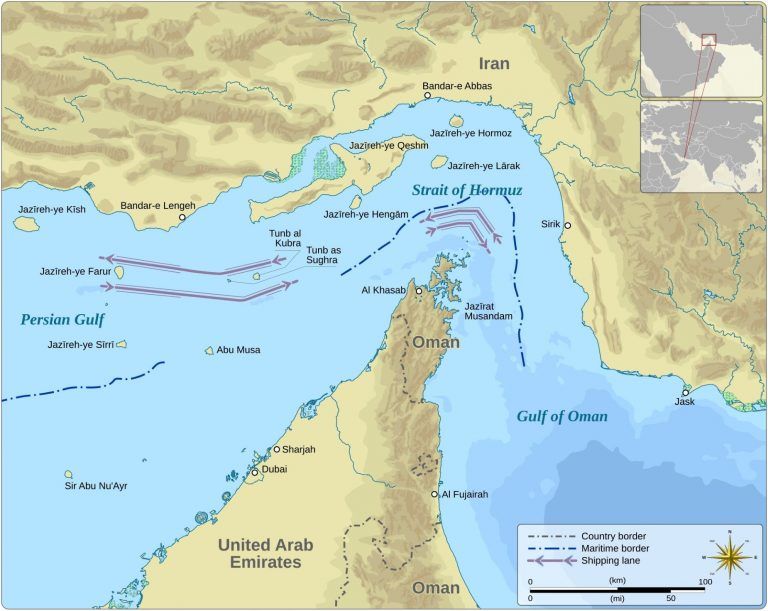
However, the Ministry points already to a decline since the war started for long-haul markets. Long-haul travel demand has fallen sharply amid the ongoing Middle East conflict. Officials say the disruption to key air routes across the region has resulted in a 13% decline in long-haul arrivals, as airlines reroute flights or cancel services.
Keeping tourism flows without Middle East air hubs
Natthriya Thaweevong, permanent secretary of the Tourism and Sports Ministry, said travelers from Europe, the Middle East and parts of the Americas are particularly affected because many long-haul routes to Thailand typically cross Middle Eastern airspace.
“We have observed an 18% drop in arrivals from Europe and the Middle East compared with normal seasonal trends,” she said.
The downturn due to the Gulf War hit several important European markets, including Germany, the United Kingdom, France and Russia, as well as Israel.
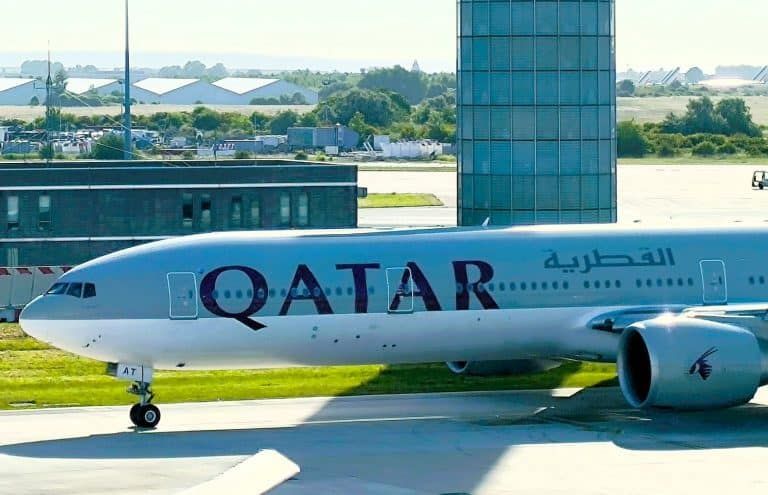
Airlines in the Gulf region have also been forced to scale back operations. Carriers such as Emirates and Etihad Airways have only resumed limited flights, while others continue to adjust schedules to avoid restricted airspace.
Between February 28 and March 5, a total of 409 flights to and from Thailand were cancelled, most of them at Bangkok’s Suvarnabhumi Airport.
For the most recent reporting week, Thailand welcomed 616,229 foreign visitors, an 8.97% drop week-on-week, with daily arrivals averaging around 88,000 travelers.
The data reveals diverging trends across Asia’s key source markets: China weekly numbers declined by 22.95% while South Korea dropped by 19.34%. Malaysia however posted a growth of 25.76% during the same week.
Re-affecting marketing budget to short-haul markets
The Tourism and Sports Ministry has modeled three potential scenarios depending on how long Middle Eastern airspace restrictions remain in place.
In the worst-case scenario, if closures last eight weeks or longer, Thailand could lose 595,874 foreign arrivals, resulting in a tourism revenue loss of around 40.9 billion baht (US$1.29 billion).
Most of the decline would come from 429,809 fewer European visitors, along with 146,419 travelers from the Middle East and nearly 20,000 from other regions.
Under a base-case scenario where disruptions last four weeks, Thailand would see 334,084 fewer arrivals, representing about THB 21.5 billion baht (US$680 million) in lost tourism spending.
If the conflict subsides within three weeks, the ministry estimates the impact would be limited to roughly 210,973 fewer visitors, costing about THB 13.1 billion (US$ 410 million) in revenue.
With long-haul demand under pressure, Thai tourism authorities are increasingly focusing back on short-haul markets such as Malaysia, India and South Korea, which are less affected by airspace disruptions. TAT is now looking at reviving its short-haul markets by re-affecting some of its marketing budget to neighboring markets as well as to India and China.
So far, air connections remain strong with even new air services planned. As an example, China West Air is reviving its route Zhengzhou – Bangkok and is launching Yantai-Bangkok from the end of March while Vietnam Airlines is launching in April a route between Ho Chi Minh City and Phuket.
Officials also see a longer-term opportunity for Thailand to position itself as an aviation hub connecting Southeast Asia and Europe, depending on how global flight routes evolve.